Search Results for: Gerry Mulligan

Mouthpieces

Updated August 19th, 2021

by Andrew Hadro

Finding a great mouthpiece can be a lot of work. Most solutions lie in practicing and developing a good sound, not in changing your set up. Many players don’t like their sound and go out and buy new mouthpieces only to delay the resolution of the problem.

If you can not play with a good sound buying a new mouthpiece will not suddenly fix everything! Long tones are the first and most important step towards a better sound.

(This is assuming you aren’t playing the stock mouthpiece that came with your instrument. If that is the case, then a mouthpiece upgrade may make a dramatic difference in your playing.)

Practice long tones for at least a month before deciding the problem is in your set up. If you do have to look for a new mouthpiece, the best advice is to find something that works and stick with it (although keep in mind that mouthpieces can need to be replaced after a few years of use). Here is some gathered information to help you in the arduous task of finding a mouthpiece. The first thing to know is that mouthpieces come in all shapes, materials, sizes, brands, and styles. Below is a chart we’ve compiled listing the different tip openings for models of different brands. Just like shoe sizes, the numbers used to denote tip opening can vary greatly between brands!

Notice: Links within this article are associate links. When you buy through links on this site, we may earn an affiliate commission. As an Amazon Associate this site earns from qualifying purchases. These fees go towards hosting fees for the website.

Baritone Saxophone Mouthpiece Tip Opening Chart

  70 75 80 85 90 95 100 105 110 115 120 125 130
Beechler 3 4 5 6 7 8 9 10
Berg Larsen 70 75 80 85 90 95 100 105 110 115 120 125 130
Brilhart Metal 9(108)
Dukoff D4 D5 D6 D7 D8 D9
Guy Hawkins 3 4 5 6 7 8 9 10
Jody Jazz 5 6 7 7* 8 8* 9
Lawton 4* 5* 6 6* 7 7* 8 8*
Lebayle 6 6* 7 7* 8 8* 9
Meyer 4(86) 5(92) 6(98) 7(104) 8(110) 9(117) 10(124)
Morgan
(Modern)
5 6 7 8 8* 9 9*
Morgan
(Vintage)
1C(68) 6 7 8
6J(108)
7J 8J
Ponzol 60(98) 65(108) 70 75
Otto Link 4 4* 5 5* 6 6* 7 7* 8 8* 9
RIA 3* 4* 5* 6* 7* 8*
Rico (Metalite)             M5   M7   M9   M11
Rousseau 3R 4R 5R 6R
Rovner 5 6 7 8
Runyon
(Custom)
1(68)
2(71)
3 4(79)
5(82)
6 7 8(94) 9(98) 10 11(109) 12(114) 13 14(114) 15(127)
Selmer B*(73) C (S80) C*(79) C** D E F G H
Theo Wanne           6*   7*   8*   9* 10
Vandoren B25 [V5](73)
B27 [V5](77)
B35 [V5](83) B5 [V16] B75 [V5](108)
B7 [V16](108)
B95 [V5](122)
B9 [V16](122)
Wolf Tayne 3 4 5 6 7 8 9 10
Yamaha 5CM 6CM 7CM
Yanagisawa 5(83) 6(93) 7(98) 8 9
  70 75 80 85 90 95 100 105 110 115 120 125 130

This Chart is definitely not complete. Numbers in ()’s are actual sizes. Contact us if you have other, or better information! Tip Openings are measured in 1/1000 of an inch. The below article is mostly referring to Baritone Saxophone mouthpieces.

Brands

Alto players have the Meyer, Tenor players have the metal Otto-Link, but baritone players don’t have a single common/standard mouthpiece that is sought after by everyone. (Not that I recommend using the most common mouthpiece). However, the most common brands I see for baritone are Berg Larsen (metal and rubber), Meyer, Vandoren, and Otto Links (usually metal). I have noticed recently that the variety of mouthpieces being used in the last few years is definitely expanding. Hopefully this is a continuing trend. The time honored “beginner’s” mouthpiece is the Selmer C*. This is also a very common mouthpiece with classical saxophonists, however someone playing anything other than strict classical music might benefit from a mouthpiece with a larger tip opening and chamber. Pepper Adams used a metal Berg Larsen, Gary Smulyan uses a vintage metal Link, Scott Robinson uses a hard rubber Vandoren, and Ronnie Cuber uses a custom made metal Francois Louis. Gerry Mulligan and Harry Carney generally used rubber mouthpieces. You can find out what your favorite players used and use that, but there is no guarantee that their type of mouthpiece will work for you, or sound at all like it did when they played it. Everyone’s embouchure is naturally different. The dimensions of your throat, the density of your teeth and bone, the size of your tongue, the length of your throat, the size and shape of your lungs, etc; these thing are all different and all affect the way the air vibrates when producing a sound on your saxophone. The saxophone doesn’t just vibrate air in the horn, your entire air column is vibrating, your face is vibrating, and the interior of the room you are in are contributing to the sound. So do not be surprised if even with the exact same set up as your favorite player that your sound is quite a bit different.

New vs. Vintage

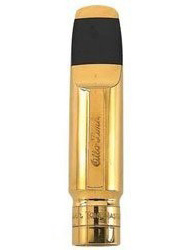
There are both new and vintage mouthpieces out there. A large difference between the two is that vintage mouthpieces were more hand crafted. Unlike the horn itself, it is actually possible to find modern hand finished mouthpieces today. Newer mouthpieces tend to be far more consistent from one mouthpiece to another of the same model, because most of the work is done with precision machinery, although many modern mouthpieces are hand finished, or even hand-made if they are from a custom mouthpiece maker or smaller, ’boutique’ brand. Having a newer mouthpiece means that if you find a new mouthpiece you love and you lose it or break it, you can buy another and easily replace it.  However, with vintage mouthpieces you have a chance that it will be unique (or flawed) and that difference might give the mouthpiece a  special sound. Although this makes the mouthpiece nearly irreplaceable. Unlike horns, I believe that some of the newer mouthpieces can definitely hold their own against vintage ones. Vintage mouthpieces are far more fragile (especially rubber ones) and can be far more expensive. Newer mouthpieces tend to be much more reed friendly and forgiving to reeds, as they are more physically symmetrical and well defined. The bottom line of course, is that nothing matters more than if it sounds good or not. If you find that recently all of your reeds seem to play poorly, consider the idea that instead of somehow the reed quality deteriorating, perhaps your mouthpiece is becoming worn (or possibly your horn is leaking).

Trying Mouthpieces Out

There are a few things to remember when trying out mouthpieces. First, if possible, try and keep the conditions and variables the same between all mouthpieces to give a fair comparison. Don’t change rooms, don’t change horns, use the same reed, same ligature, and play the same things to try each mouthpiece. Be sure to test loud dynamics, and soft, hard articulation and gentle, upper register and lower register. A long tone will acclimate you to the new piece and give a solid idea of its sound. This is tricky as a more open mouthpiece will need a softer reed and if you try them in different stores or rooms the sound of the room will undoubtedly be different. Do the best you can, bringing a small recording device is not a terrible idea. Bring a tuner! See how the mouthpiece plays in tune on your horn. Most mouthpieces and horns will sound and play best when they are adjusted to be in tune.
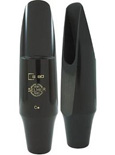
Most importantly: Try as many as possible! Many online sites will send you a few (after you pay for them) and allow you to try them for an extended period and send them back for a full refund if you do not like them. Also, many mouthpieces are hand finished, so if you find a mouthpiece you like and want to purchase see if you can try out 2-3 of the exact same mouthpiece, they will each be slightly different. Most stores will let you try any mouthpiece before purchasing as well.


Tip Openings
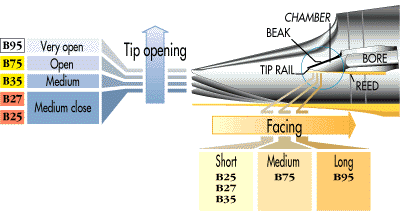
The tip opening is the distance between the reed and the tip of the top of the mouthpiece. A good starting place for baritone is around .090 inches (around a 5 on the ‘Otto Link’ sizing scale). But everyone’s mouth, teeth, tongue, palate, etc. are all different. A wider (more open) tip opening generally requires a softer reed, while a smaller, or more closed opening, will require a harder reed. A medium-open set up would be .110 inches opening with a strength 3 or so reed (although remember strengths are not consistent between brands). Its a good idea to try many different tip opening to see what you can handle and what you like. If the tip opening is too large it will seem very hard to produce a clear tone, or sound extremely stuffy or fuzzy. If you are trying a mouthpiece more open than you are comfortable on it may squeak quite a bit because it is harder to control. It is important to note that using a harder reed as opposed to a larger tip opening are not exactly the same. Both options provide more resistance, but a small tip opening with a really hard reed will have a different sound, timbre, and feel than a wide tip opening with a soft reed even though they may have similar resistances.

Facing Length and Rails
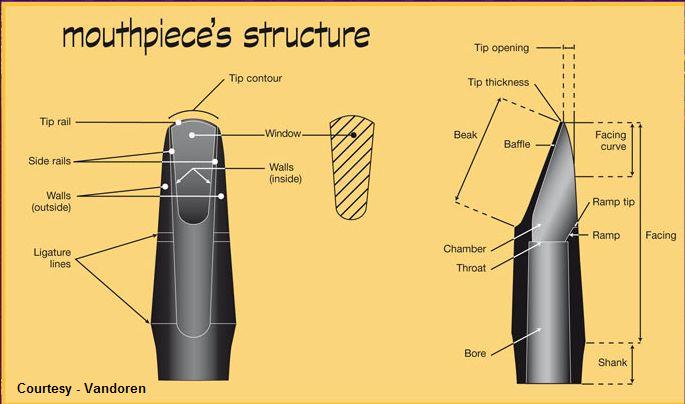
Most saxophonist tend to only consider the tip opening when looking at mouthpiece specs. This neglects two things that can have a huge effect on the way a mouthpiece plays and sounds – facing lengths and rails. Clarinetists tend to be much more concerned with facing length and rails than saxophonists, I’m not sure why but I have noticed this. The facing length refers to the distance from the tip of the mouthpiece to where the reed actually begins to touch the rails of the mouthpiece. This distance can vary greatly. A longer facing will reduce resistance (meaning you can use a harder reed) whereas a shorter facing increases resistance. A good analogy is like a diving board, the longer the board, the more flimsy and less resistant to bending it becomes. And while a shorter facing and a wider tip opening both lead to additional resistance you can’t exactly substitute one for the other, they affect the feel, articulation, response and sound quite differently.

The width of the rails can vary quite a bit from one mouthpiece to another. Not only the side rails but the tip rail at the top of the mouthpiece as well. The rails of the mouthpiece are what the reed actually vibrates against and bounces off, so they are responsible for producing the actual vibration of the air! Thicker rails increase resistance and can slow down articulation and response but will provide a deeper, warmer and possibly richer sound. Thinner rails are better for quick articulation and ease of response.

So as you can imagine the combinations between tip openings, facing lengths and rail widths are nearly endless. Especially when you consider the shape of the facing curve even for two tip openings can be completely different. And we haven’t even discussed baffles and chambers yet!

Metal vs. Rubber et al

Before we dive in, let me definitively say – the design and shape of the mouthpiece (baffle + chamber) will affect the sound (brighter/darker etc) far more than the material its made from! Not all metal mouthpieces are bright, and in fact some hard rubber mouthpieces can be incredibly bright and loud!
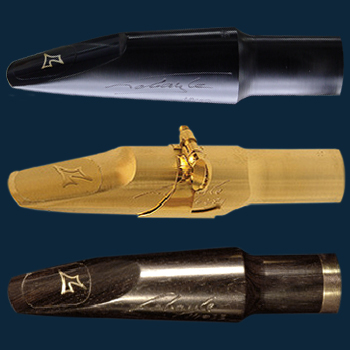
There are several materials used for mouthpieces including metal, plastic, glass, wood, and hard rubber (ebonite). Metal and hard rubber (ebonite) are by far the most common materials used for baritone saxophone mouthpieces. There are a few basic differences between hard rubber mouthpieces and metal ones. Metal mouthpieces are much less fragile as they can be washed with anything, they wont crack, and wont shatter if dropped.

Plastic mouthpieces are usually worthless and just for students, they may come in the case with a new saxophone. Glass mouthpieces are extremely rare, especially among baritone mouthpieces – they are much more common for clarinet. Wooden mouthpieces are somewhat rare as well, and can sound great, but may be hard to keep in shape and may be expensive. They are affected greatly by changes in humidity (weather) and are prone to cracking.

The difference in sound depends mostly on the chamber, curve of the facing, and tip opening, baffle, chamber etc, as opposed to the material. Metal mouthpieces are often perceived to have a brighter tone while hard rubber mouthpieces tend to be much darker and mellow. This is not necessarily because of the material they are composed of, but often metal mouthpieces are designed to project a bit more. A good example of the difference is Pepper Adams Vs Gerry Mulligan. Pepper played with a very bright sound using a metal mouthpiece with a baffle while Mulligan’s sound was much darker – he used a large chamber hard rubber mouthpiece.

3D Printed Mouthpieces

I’ve recently written a whole opinion article on 3D printed mouthpieces. Rather than paste it here I’ll let you check out the whole article.

Baffles + Chambers

Baffles and different chamber sizes are used to alter the speed of the air as it travels through the mouthpiece, thus changing the sound. A baffle refers to when the inside of the mouthpiece below the tip opening is raised in a variety of shapes and sizes. This generally creates a more narrow opening which forces the air through faster, and creates a brighter sound. High baffles are fantastic for when you need punch in your sound or to play extremely loud – highly recommended for rock and salsa gigs. There are a few mouthpieces out there with a movable baffle, although none of these have been considered more than a novelty. Baffles can be added or removed to existing mouthpieces by skilled craftsmen.

Different chamber sizes can have similar effects to baffles. The chamber is the inside of the mouthpiece towards the bottom of the mouthpiece. A large chamber slows down the airspeed, and will usually create a much darker sound. A small chamber generally produces brighter one. A large chamber may provide more resistance as well. When you see two numbers in the size of the mouthpiece (e.g. 100/2) the second number (2 in this case) is the size of the tone chamber (inside of the mouthpiece). The larger the number the larger the chamber, and darker the sound. Note that a larger chamber may also affect the tuning, as it increases the volume inside the mouthpiece, thereby slightly altering the pitch.
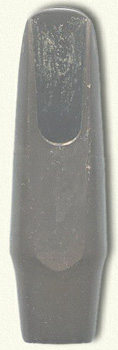
Mouthpiece Care

Mouthpieces, especially metal ones, don’t need much care, but they do need to be looked after from time to time. It is a really good idea to swab out your mouthpiece every other, if not each time you use it. If saliva is left on the mouthpiece after playing, it can form over a period of months into calcium (carbonate) deposits which look like a crusty white substance that is extremely hard to remove. Scraping these deposits off can possibly harm the mouthpiece and if untreated they can eventually build up to the point where they will interfere with the mouthpiece’s performance. Here’s a site with more information concerning this malady. The best solution is to not allow the build up in the first place. There are some people that swear by soaking a mouthpiece in liquids such as vinegar can remedy this, but best to avoid having to soak your mouthpiece in anything. Some people prefer to leave their reed on the mouthpiece, rather than putting their reed away after playing. This is a very sure way to build up the calcium deposits and can ruin a good piece. It is also best to wash your mouthpiece occasionally. However if you mouthpiece is a hard rubber mouthpiece, wash it only as often as you need, and only with room temperature water! Be sure to use only water, not soap. Hot water can cause certain materials in the rubber to leech out, specifically the sulfur used in the firing process that hardens the rubber. You may notice that it turns green after you wash it in warm water – this is not a good thing. This is evidence that some of the materials used to make the mouthpiece are leeching out. Metal mouthpieces are much less fragile and can be washed with soap and warm water. It is even possible to scrape out calcium deposits in a metal mouthpiece without too much harm.

On thin rubber baritone pieces the most fragile place is sometimes the shaft or shank where the mouthpiece fits onto the neck. It is very important not to force a rubber piece onto a neck cork that is too thick. Always use cork grease, use a twisting motion, and don’t force it! If the shaft does crack it can sometimes be repaired and have a ring placed on the end of it. However, mouthpieces with this kind of damage are rarely repairable. Some new mouthpieces come with a ring already on the end to protect against this type of damage. If a mouthpiece is dropped and chipped it can sometimes be repaired by a skilled mouthpiece repairman using different materials.
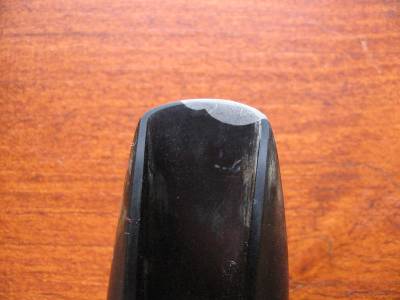
Hard Rubber mouthpieces can wear out in as little as a few years if played a lot. If you find that the same reeds you’ve always been using seem to be getting worse, less reliable, or strangely softer this could very well be a sign that your mouthpiece is starting to wear out. If possible find a new version of your exact mouthpiece and try it out to see there is a large difference.

When to replace a mouthpiece?

I am often asked how long a mouthpiece lasts. Well that depends on a lot of variables that are different for every person. Do you play every day? How many hours? Hard/resistant set up? Do you wash the mouthpiece? Do you bite hard?

In general metal mouthpieces will last longer than hard rubber mouthpieces. Hard rubber mouthpieces can be tricky to gauge, because they don’t just suddenly stop working. They will slowly change over time, almost like how a saxophone slowly begins to go out of adjustment and leak. You may not even realize until its in terrible shape, or until it is tuned up and you feel the difference! As mouthpieces age the facings can tend to get shorter as the facing curve is slowly flattened out, and the rails can be become much less crisp and no longer symmetrical as the wood reed is vibrated against them thousands of times every day. You may find that older mouthpieces are much less reed friendly – often times people with vintage mouthpieces think reeds are far worse than they are because they need to find a reed that works with their worn out/asymmetrical rails. Generally I think people playing hard rubber mouthpieces that play fairly often should consider a new mouthpiece, or at least make sure theirs is still in good working order after 3 or 4 years – maybe more if there is not too much wear.

Refacing

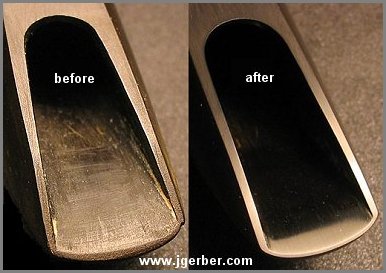
As your embouchure progresses you may find that your mouthpiece is restrictive. The reed seems to clamp shut when you try to put your full air through it, and all reeds seem too soft. It may be time to get a mouthpiece with a larger tip opening. Or perhaps your mouthpiece has gotten older and a bit worn – the rails are soft and uneven and maybe a chip or two has developed. If you love your mouthpiece and can not find anything as good, you can have a skilled mouthpiece craftsman “reface” the mouthpiece and give it a larger or smaller tip opening, or redo the rails. This is a risky thing to do and will certainly change the way the mouthpiece plays, perhaps not for the better. A baffle can also be placed in a mouthpiece. There is no end to how a mouthpiece can be customized, modified, etc. But it is certainly costly, and it might be easier to find a new mouthpiece entirely. An older mouthpiece that is beginning to wear down may also be refaced to restore symmetry and increase its consistency. One thing to consider – if you take a vintage mouthpiece and reface it – is it still really a vintage mouthpiece? The most important part of a mouthpiece is the facing curve, tip opening and rail design. If you remove all of these the only thing in common with the other vintage pieces is the basic material, which as we discussed is secondary to the geometry of the mouthpiece.
Price

Mouthpiece prices vary greatly. Student baritone mouthpieces can cost as little as $90 and a new custom mouthpiece can be as much as $900. Vintage mouthpieces depending on their desirability, age, and condition can be expensive or extremely cheap. Do not let price determine its value, there plenty of great mouthpieces out there for well under $400. Remember, the most important thing is how it sounds and how it plays.

Other resources

WWBW.com – Woodwind Brasswind has many new mouthpieces for sale, and has a trial period.
Saxquest.com – Has a large variety of vintage mouthpieces.
Theo Wanne’s website – information about mouthpieces.
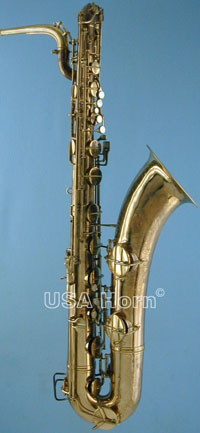
Brands and Horns

by Andrew Hadro
(updated Nov, 2014)

When looking for a baritone saxophone there are a huge number of factors to consider. The following are the factors that I consider the most important, and my thoughts concerning each one.

Disclaimer:

I have no stake in your eventual decision to buy an instrument, and the only thing I have to give is my opinion. Everything I’ve said here is based on my experience playing, practicing, researching and talking to other musicians about these horns, but there are obviously going to be exceptions.
Here’s what is most important:
How a horn sounds and if it works for you. It doesn’t matter if you are playing a lead pipe with popsicle stick on the end of it, as long as it sounds and feels good to you. Also, try as many horns as possible – ALL types.

New or Vintage?

In this author’s opinion, the new horns today are not up to snuff compared to older ones. This is especially true of the baritones. They are far too often neglected or not even produced at all by newer companies. Selmer has been constantly behind in their baritone models since at least the ’70s — there was no Mark VII produced because they were so behind they eventually just started putting out the new model as Series I’s. Borgani makes great horns, but their baritone has been “coming soon” for about 5 years now. There may be good new horns out there today, but the majority are not great and they certainly don’t compare to those of yesteryear. And perhaps the companies aren’t to be blamed. There simply is not a large enough market for professional quality baritones to justify producing great horns. That being said there are a huge number of new horn manufacturers starting up shop, it is my hope that with time, practice and research the new horns produced will someday rival any made before.

UPDATE: Check out a review of the hand made Italian Rampone Cazzani horn!

UPDATE: Ok, so when I wrote this article many years ago modern horns were definitely not great. They’ve gotten a lot better, though there are still far too few Low Bb options, and really nothing that has similar dimensions and sound profile to an old Conn. Yamaha especially has impressed me with their recent updates to their baritones. The new Custom Z baritone is great, and the updates to the 62 were very welcome.

There are some upsides to a new horn:

  • Won’t need repair work as often — parts will be much easier to replace
  • Likely to be sturdier
  • They’ll be cleaner, and look “nicer” (although some new horns also offer a sort of “vintage” look, if you prefer that)
  • Almost all new horns are made with Low A’s — often encouraged by band directors, used in rock bands, and marching bands.
  • Easier to find, and can be ordered.
  • Much brighter sound in general — subject to brand and model.
  • Intonation is likely to be more accurate, and smoother keywork
  • More consistent from one horn to the next, easier to replace.

… and there are definitely some downsides to a new horn:

  • The Sound! this is debatable, but I firmly believe the newer horns’ sounds are often thinner and never as rich as most older horns. Although with the new resurgence of modern horn manufacturing, I have great optimism that newer horns will continue to improve.
  • New horns can be much heavier
  • Poorer craftsmanship — can’t be helped, as it is simply not cost effective or even possible to hand-craft horns anymore
  • Much harder to find models without a Low A
  • Fewer choices in bore dimensions. Most modern saxophones’ inside dimensions are modeled after Selmer’s so fans of the Vintage Conn/King/Martin sound will be at a loss.
  • Fewer model options for each brand than altos or tenors
  • Less unique, and less chance of finding that one horn that really stands out and speaks!

What Brand?

I won’t even attempt to list all of the companies now manufacturing new baritones as there are new ones seemingly all the time. However a few to check out: Selmer, Yanigasawa, Yamaha, Eastman, P Mauriat, Cannonball, MAC Sax, the list goes on..

For vintage horns there are 4 common major brands to consider: Conn, King, Selmer and Martin, with Conn and Selmer leading the pack. Over the years and through many mergers and buyouts Selmer and Conn are now one company. There are some very decent Bueshcer horns for great prices out there too.

Martin Baritones are relatively cheap, well made and sound pretty good. An excellent choice for someone looking for a nice older horn without the outrageous price tag. They can be heavy due to their soldered tone holes and construction.

King Baritones are relatively cheap as well and sound very nice. King saxophones generally are a bit brighter and years ago were the standard among “rock” saxophonists in the early days.

There are many great lesser known horns out there as well, low Bb Bueschers are beautiful horns and Couf (made by Keilwerth) produced good baritones in the ’70s. Artists such as Glenn Wilson and Tim Price have played them.

There is a pronounced difference between “American” style horns and “French” horns. Selmers being the predominant French-made horn, and Kings, Conns and Martins being American. The American horns have a different bore shape and size, and sometimes a larger bell. They generally have a broader larger sound as opposed to a narrow more focused sound. Most modern and new horn manufacturers base their designs on the French style.

Selmer Baritones. The Selmer Mark VI is probably the most sought after model of saxophone ever made. There is certainly a large demand for Selmer baritones as well. The best models to look out for are the Balanced Action and Mark VI. Ronnie Cuber, Claire Daly, Howard Johnson, Pepper Adams, and plenty more have all used Selmer baritones. Selmers in general have a very focused sound and excellent key work. If you are looking for a vintage horn with a Low A, Selmer is probably the way to go since they have been making them since the ’50s or so. Keep in mind that most modern/new horns emulate the bore shape and size of Selmer’s Mark VI.

The Conn. It seems to me that more great baritone players have chosen Conn than any other. A short list includes:  Harry Carney, Gerry Mulligan, Scott Robinson, Gary Smulyan, Hamiett Bluiett, Dana Colley and others. Perhaps this is due to Conn’s deep beefy sound that goes hand in hand with the lower register. The key work is a little more awkward than Selmer’s (often no articulated G# key), but if the Conn sound is what you are going after, the time it takes to adjust to the keys will be well worth the huge sound. Generally the best Conns are those made before the factory was moved to Mexico in the late ’50s. The classic Conn baritone model is the 12m “Naked Lady” or “Lady Face”. These nicknames refer to the engraving of a female figure on the bell of the horn. Conns before 1960 are mostly low Bb horns. Some Conns also feature a zinc neckstrap ‘ring’ which does not wear down like most rings. Be wary as some of the later Conns after the factory was moved are generally lesser instruments, sometimes identifiable by the nickel (silver looking) keys. Also, older Conns have rolled tone holes, although there is a period in the ’50s before the move where they produced fine horns without rolled tone holes as well.

Low A or Low Bb?

PERSONAL OPINION BELOW:

Some swear by low A horns and some swear against them. The way I see it, everyone who uses a Low A essentially just wants that extra note. I have not come across too many players that play a Low A because of the way it sounds. I don’t think the Low Bb players dislike having an extra note, they are simply not willing to sacrifice anything for it. The Low A definitely weakens the power of the low end of the horn. From a business perspective one could argue that you need a low A for when Broadway shows, recording sessions (jingles) or big band charts call for it. Personally, I’d rather have the entire range of the horn sound better, than be able to hit another note ( Click here to read how to make an extension for your low Bb horn!). That being said, I do have a Low A baritone in the closet should I ever need it.

The Low A horn is not a bad idea in theory. However, they don’t seem well thought out. When designing a Low A horn the bell is generally just extended and another tone hole is drilled. If you look at any saxophone the opening at the neck is the smallest in diameter and the bell is the largest. Small to big. When they add a Low A they stop expanding the size of the tube so that the diameter at the Bb tone hole is the same as that at the Low A tone hole. Not that I blame them, to make a bell large enough to be in correct proportion it would have to be huge. But that doesn’t nullify the fact that the bell on Low A horns is just not big enough to account for all of the notes. To build a Low A horn you must design it from the neck down! Modern Low A baritones don’t resemble any of the other saxophones, just as straight soprano’s do not. the shape of the horn, bore dimensions, and bell size all vastly affect the sound of the entire instrument.

Low end aside, the extra hunk of metal on the end of the bell affects the resonance, timbre, and overall sound of the rest of the horn. Everyone claims you need a Low A baritone to play in a big band. This seems ironic to me, as it is much easier to punch the low end of the horn and support a section without the extra tubing!

Kenny Berger made the following comment, which I found helpful in explaining the issue:

“The sax, being a conical stopped pipe, has certain built-in acoustic properties. One is that the bell(lowest) note tends to be bright and full in quality and tune, if anything on the high side while the next note up (traditionally B natural), tends to be the darkest, most resistant note and tends to tune on the low side.
Needless to say, these aspects also effect the notes that fall within the overtones of these notes.
Add the low A and all these basic acoustic properties are thrown totally out of whack( is there any worse feeling than trying to get a good sound on low Bb on a low A horn). Plus I have run across some low A horns where the low A is flat!

The serial number game

Serial numbers are usually located on the bottom end of the horn on the back, just few inches lower than the thumb rest. Occasionally the serial number will be placed as well or only on the bell. There are often lists of a company’s serial numbers that can tell you what year a horn was manufactured.

There are some fanatics out there, usually Selmer Mark VI fans, that look for a horn based primarily on the serial number. Serial numbers will tell you the year the horn was made. The theory is that certain years produced better horns, perhaps because of better materials, better craftsman, economy etc. This is a decent theory, and for the most part the “good” serial number range horns may tend to be really great. However, this does not mean that an occasional terrible horn was not produced during the good years, or that an incredible horn was not produced in the years that don’t fall in the “good” serial number range. You can use these numbers as guidelines, buy my experience has told me that you just need to find as many horns as you can that fit your needs and try them all as much as you can. You may find you like the way the horns in the off years sound better than those in the prime years. A horn from the golden period may have been abused and poorly repaired as well, leading to a poorly functioning horn.

Materials and lacquer

There are three common materials saxophones are made from (with many variations): Brass, Silver, and Gold. If fact they are all made of brass, but are sometimes plated with gold and/or silver. A straight brass horn, usually with lacquer, is by far the most common. Brass is an alloy (often including copper and zinc, and sometimes other metals.) Over the years the ratios and components have changed greatly. New horns tend to have more zinc, giving them a brighter sound (and more weight, zinc is dense!). French brass has long been considered of the best quality. Brass is used for instruments because of the way it resonates as well as because it is an extremely soft metal and is very malleable.

Silver plated saxophones are not uncommon, however they are not generally solid silver. It is usually a brass body that has been plated in silver making these horns slightly heavier. A horn with silver plating will definitely have a slightly different tone, timbre and sound. Opinions vary as to exactly what the difference is. Gold plated horns are even less common. Gold is a heavy metal and plating a horn will make it even heavier. Gold tends to darken the sound of an instrument. Gold or silver plated horns are often more expensive than lacquered horns. Also, because gold does not bond well directly to brass gold plated horns will actually have a thin silver plating on top of the brass and below the gold, making them even heavier.

Re-lacquering

Sometimes people will find a vintage horn where some or most of the lacquer is worn off. In an attempt to “restore” the horn they will have it relacquered. This is not always a great idea and can ruin an otherwise excellent horn. The instrument companies are forced to change the composition of their lacquer every year due to new laws. Needless to say the lacquers used today are very different than those used years ago. And regardless of whether they are better or worse, they are not suited to the compositions of older horns. The method used to relacquer a horn is also a problem. It often involves dipping the horn in acid, or excessive buffing to remove all old lacquer. This can thin out the metal and greatly affect the sound and response of the horn. Relacquered horns are of lower value than the same horn that has incomplete or no lacquer. There are a few ways to tell if a horn has been relacquered. First of all, if a horn is more than 10 years old and has all or even most of the lacquer that is unusual. Also the engraving on the bell will be more shallow and less defined than it would otherwise be. If the horn is recently relacquered there may be a red dust residue left around the posts and keys.

How Much to Pay?

The price of a horn largely depends on where you get it. Horns tend to be far more expensive in New York City, although most things are. More and more horns are sold over the Internet. This drives the prices of more inexpensive horns down, while sending the most sought after horns’ prices spiraling skyward. An eBay buy is always a bit of a risk unless you thoroughly do your research and don’t expect too much. There are some sites that have actual stores as well that are great. USAHorn.com has an excellent site, great horns, and a physical store you can visit as well.

I heard about a Low A mark VI baritone recently selling for $12,000 — this seems ridiculous. I would suggest never paying more than $7,000 for a baritone, and even than it would have to be the most amazing horn I had ever played to rate that price. A great Conn should run no more than $4,000-$5,000 or so, and most other brands should be even less. Low A baritone’s also can cost more depending on make and age.

More Resources

There are plenty of places to go find more information about every kind of horn imaginable. USAHorn.com just launched a new site which is pretty amazing, and has an incredible amount of information. You can take a look at it here:
www.SaxPics.com

Transcriptions

Andrew Hadro, Curator of JazzBariSax.com

Please let us know if you would like to submit one of your own transcriptions.

Notice: All of the album links within this article are associate links. When you buy through links on this site, we may earn an affiliate commission. As an Amazon Associate this site earns from qualifying purchases. These fees go towards hosting fees for the website.

Below are over 170 transcriptions.

They have been downloaded more than 1318487 times.

Artist Name

Song Title

Album

Transcription
Author

Download

Pepper AdamsAlone TogetherCritic’s ChoiceItay Raiten Alone Together - Pepper Adams (9989 downloads )
Pepper AdamsAlone TogetherChetMatthew Karnstedt Pepper Adams - Alone Together (Chet) (7273 downloads )
Pepper AdamsBossallegroThe Master
Aaron Lington Bossallegro - Pepper Adams (17039 downloads )
Pepper AdamsChelsea BridgeThe MasterAaron Lington Chelsea Bridge - Pepper Adams (10710 downloads )
Pepper AdamsCat WalkCat Walk [Donald Byrd]Giles Miton Cat Walk - Pepper Adams (11761 downloads )
Pepper AdamsCindy’s TuneEncounterCharles McNeal Cindy's Tune (5932 downloads )
Pepper AdamsDown Tempo Off to the Races [Donald Byrd] Ryan Middagh Down Tempo - Pepper Adams (10318 downloads )
Pepper AdamsEach Time I Think of YouCat Walk [Donald Byrd]Aaron Lington Each Time I Think Of You - Pepper Adams (9669 downloads )
Pepper AdamsEnchilada BabyThe Master
Aaron Lington Enchilada Baby - Pepper Adams (9133 downloads )
Pepper AdamsEven StevensLuminescence [Barry Harris Sextet]Allison Young Pepper Adams - Even Stevens (3768 downloads )
Pepper AdamsFalling In Love With LoveRed’s Good Groove [Red Garland]Bastian Contreras Pepper Adams - Falling In Love With Love (5407 downloads )
Pepper AdamsHaitian Fight SongPepper Adams Plays
Charlie Mingus

Eli Wilson Haitian Fight Song - Pepper Adams (13909 downloads )
Pepper AdamsI’m An Old Cow HandChant [Donald Byrd]Charles McNeal Pepper Adams - I'm An Old Cowhand (5812 downloads )
Pepper AdamsLovers of Their TimeThe Master
Aaron Lington Lovers of their Time - Pepper Adams (10308 downloads )
Pepper AdamsLittle Rootie TootieThelonious Monk Orchestra
At Town Hall
Ryan Middagh Little Rootie Tootie - Pepper Adams (8907 downloads )
Pepper AdamsLuminescenceLuminescence [Barry Harris]Guillaume Orti Pepper Adams - Luminescence (4376 downloads )
Pepper AdamsMary’s BluesDakar [John Coltrane]Ryan Middagh Mary's Blues - Pepper Adams (11704 downloads )
Pepper AdamsMoanin’Blues & RootsBob Trachtenberg Pepper - Moanin (17701 downloads )
Pepper AdamsNumber FiveGroovy [Freddie Hubbard]Noah Pettibon Adams - Number Five (6218 downloads )
Pepper AdamsPent Up HouseUrban DreamsLuke Miller Pepper - Pent Up House (10580 downloads )
Pepper AdamsPlayed TwiceExhilaration [Peter Leitch]Noah Pettibon Pepper Adams - Played Twice (5871 downloads )
Pepper AdamsRue SerpenteThe Master
Aaron Lington Rue Serpente - Pepper Adams (8533 downloads )
Pepper AdamsSoulful KiddyAt the Half Note Cafe [Donald Byrd] Ryan Middagh  Soulful Kiddy - Pepper Adams (8893 downloads )
Pepper AdamsSudwest FunkOff to the Races [Donald Byrd]Ryan Middagh  Sudwest Funk - Pepper Adams (10412 downloads )
Pepper AdamsUnforgettablePepper Adams QuintetMartin Schaefer Pepper Adams - Unforgettable (6507 downloads )
Pepper AdamsUrban DreamsUrban DreamsJorge Retamoza Pepper Adams - Urban Dreams (6038 downloads )
Pepper AdamsStraight No ChaserSwedish TV Broadcast [YouTube]Noah Pettibon Pepper Adams - Straight No Chaser (6942 downloads )
Pepper AdamsTensionsBlues and Roots [Charles Mingus]Bastian Contreras Pepper Adams - Tensions (6100 downloads )
Pepper AdamsTisJulianAidan Sears Pepper Adams - Tis (5891 downloads )
Pepper AdamTis10 to 4 at the 5-SpotMartin Schaefer Pepper Adams - Tis (4018 downloads )
Pepper AdamsYou Turned The Tables On MeJazzmen DetroitNoah Pettibon Pepper Adams - You Turned The Tables On Me (6460 downloads )
Frank BasileRapbs DelightThursday the 12thMatthew Huntington Rabps Delight - Pepper Adams (9062 downloads )
Frank BasileTwo Bass HitTwo Part SolutionAllison Young Frank Basile - Two Bass Hit (559 downloads )
Frank BasileA Winter’s TalePepper Adams: Complete
Compositions,
Vol 4
Anthony Pellegrini Basile - A Winters Tale (6052 downloads )
Hamiet BluiettJoin Us / Get HappyJoin UsMasahiro Totsuka Join Us - Get Happy - Hamiet Bluiett (6644 downloads )
Nick BrignolaBlue MonkIn Your Own Sweet Way
[Sal Salvador]
Gabe Katell Blue Monk - Nick Brignola (11293 downloads )
Nick BrignolaBillie’s BounceBaritone MadnessGabe Katell
(Updated/edited by Jeff Miller)
Nick Brignola - Billie's Bounce (J Miller/G Katell) (5103 downloads )
Nick BrignolaGerrylikeFlight of the EagleBrian Williams Gerrylike - Nick Brignola (8681 downloads )
Nick BrignolaHesitation BluesRaincheckAlec Trent Brignola - The Hesitation Blues (8060 downloads )
Nick BrignolaHot HouseOn a Different LevelShirantha Beddage Hot House - Nick Brignola (8607 downloads )
Nick BrignolaJoy SpringRaincheckLuke Miller Brignola-Raincheck (9167 downloads )
Nick BrignolaLike Old TimesLike Old TimesAlec Trent Brignola - Like Old Times (7830 downloads )
Nick BrignolaRaincheckRaincheckAlec Trent Brignola - Raincheck (7891 downloads )
Nick BrignolaSoftly, As In A Morning SunriseOn a Different LevelZachary Spondike Nick Brignola - Softly As In A Morning Sunrise (5143 downloads )
Nick BrignolaStar EyesWhat It TakesAlec Trent Brignola - Star Eyes (8081 downloads )
Nick BrignolaWalkin Shoes (page 3)Plays MulliganGeorge Gorbov Walkin Shoes - Nick Brignola (9947 downloads )
Harry CarneyAgraFar East Suite 
[Duke Ellington]
Ben Huff Carney - Agra (6218 downloads )
Harry CarneyStay AwakePlays Mary Poppins
[Duke Ellington]
Ben Huff Carney - Stay Awake (6077 downloads )
Harry CarneyFestival JunctionLive at Newport
[Duke Ellington]
Anthony Pelligrini Harry Carney - Festival Junction (6032 downloads )
Harry CarneyTake the A TrainHarry Carney with StringsMaximiliano D.L. Carney - Take the A Train (8849 downloads )
Serge ChaloffAll The Things You AreBlue SergeEvan Smith Serge Chaloff - All The Things You Are (7227 downloads )
Serge ChaloffHandful of StarsBlue SergeSerge Bogdanov Chaloff - Handful of Stars (8965 downloads )
Serge ChaloffTea for TwoSerge Chaloff / Buvette Club, Rock Island February 1953″Itay Raiten Serge Chaloff - Tea for Two (3702 downloads )
Ronnie CuberAll of MeThe George Benson CookbookAaron Lington All of Me - Ronnie Cuber (14489 downloads )
Ronnie CuberArroz Con PolloCubismMatthew Stevenson Ronnie Cuber - Arroz Con Pollo (5939 downloads )
Ronnie CuberBenny’s BackThe George Benson CookbookAaron Benassi Ronnie Cuber - Bennys Back (6319 downloads )
Ronnie CuberBig Fat LadyThe George Benson CookbookAaron Benassi Ronnie Cuber - Big Fat Lady (4893 downloads )
Ronnie CuberBye Bye BlackbirdSteve Gadd and Friends:
Live at Voce
Mark HiebertDownload
Ronnie CuberThe CookerThe George Benson CookbookAlexis Bertein Ronnie Cuber - The Cooker (3580 downloads )
Ronnie CuberA Foggy DayIt’s Uptown [George Benson]Scooby-sax.comDownload
Ronnie CuberBye Bye BlackbirdLive at Voce [Steve Gadd]Andrea Iurianello Cuber - Bye Bye Blackbird (6587 downloads )
Ronnie CuberEasy LivingLove For Sale
w/Netherlands Metropole Orchestra
Andrea Iurianello Ronnie Cuber - Easy Living (7587 downloads )
Ronnie CuberEmilyNew York MinuteBohdan Janeczek Cuber - Emily (9258 downloads )
Ronnie CuberFourRonnieAdrian Barnett Four - Ronnie Cuber (10076 downloads )
Ronnie CuberGiant StepsLee Konitz NonetAaron Benassi Ronnie Cuber - Giant Steps (5616 downloads )
Ronnie CuberGroovin’ HighBoplicityLuke Miller Groovin High - Ronnie Cuber (10629 downloads )
Ronnie CuberThe Hardbop GrandpopThe Hardbop GrandpopAnthony Pelligrini Ronnie Cuber - Hardbop Grandpop (7030 downloads )
Ronnie CuberI’ll Remember AprilLove For Sale
w/Netherlands Metropole Orchestra
Martin Schaefer Ronnie Cuber - I'll Remember April (7315 downloads )
Ronnie CuberMoanin’Nostalgia In Times SquareScott TringaliDownload
Ronnie CuberReady and AbleThe George Benson CookbookMartin Schaefer Ronnie Cuber - Ready and Able (3843 downloads )
Ronnie CuberPassion FruitLive at JazzFest BerlinGiovanni Contri Ronnie Cuber - Passion Fruit (5022 downloads )
Ronnie CuberThe Song Is YouLove for SaleAaron Lington The Song Is You - Ronnie Cuber (9468 downloads )
Ronnie CuberSubwest FunkCuber LibreMatthew Huntington Subwest Funk - Ronnie Cuber (9917 downloads )
Ronnie CuberStar EyesCuber LibreMartin Schaefer Ronnie Cuber - Star Eyes (6960 downloads )
Ronnie CuberWalkin Shoes (page 2)Plays MulliganGeorge Gorbov Walkin Shoes - Ronnie Cuber (10444 downloads )
Ronnie CuberWatching the River FlowSteve Gadd – Live at the Vortex -2010Bob Trachtenberg Cuber - Watching the River Flow (8272 downloads )
Dennis DiBlasioCoconut ChampagneLive From San Francisco
[Maynard Ferguson]
Adrian Barnett Diblasio - Coconut Champaign (12184 downloads )
Bob GordonDot’s GroovyJack Montrose with Bob GordonZachary Spondike Bob Gordon - Dots Groovy (4459 downloads )
Bob GordonHave You Met Miss JonesJack Montrose with Bob GordonZachary Spondike Bob Gordon - Have You Met Miss Jones (4652 downloads )
Lars GullinDanny’s DreamDanny’s DreamFrancesco Badaloni Gullin - Danny's Dream (8213 downloads )
Lars GullinFedjaFedjaFrancesco Badaloni Lars Gullin - Fedja (6083 downloads )
Lars GullinSummertimeFabodjazzAaron Lington Summertime - Lars Gullin (12605 downloads )
Jimmy HeathShort LifeMaggie [Howard McGee]Anthony Pellegrini Jimmy Heath - Short Life (5672 downloads )
Brian LandrusJ.J.For NowJacob Tracy Brian Landrus - JJ For Now (6360 downloads )
Brian LandrusRubyGenerationsJacob Tracy Brian Landrus - Ruby (5703 downloads )
Bruce JohnstoneStay Loose with BruceM.F Horn 4 & 5 – Live at Jimmy’sGabe Katell Stay Loose with Bruce - Bruce Johnstone (8981 downloads )
Bruce JohnstoneSuperbone Meets The Badman (M Ferguson)SUPERBONEMattew Stevenson Bruce Johnstone - Superbone Meets The Badman (4630 downloads )
Jason MarshallDowntown BerniniSign The BookItay Raiten Jason Marshall - Downtown Bernini (5892 downloads )
Jason MarshallNever Stop Loving YouNew BeginningsTom Sabin Jason Marshall - Never Stop Loving You (5652 downloads )
Gerry MulliganAll the Things you AreTwo Of A Mind
[with Paul Desmond]
Giles Miton All The Things You Are - Mulligan (14238 downloads )
Gerry MulliganAll the Things you AreTwo Of A Mind
[with Paul Desmond]
Andrew Hadro All the Things You Are (11480 downloads )
Gerry MulliganAs Catch CanWhat Is There To Say?Orlando Cialli Gerry Mulligan - As Catch Can (6586 downloads )
Gerry MulliganBernie’s TuneThe Original Quartet With Chet Baker
[2-CD SET]
Andrew Hadro Bernie's Tune - Gerry Mulligan (11897 downloads )
Gerry MulliganBlessed are the PoorGerry Mulligan & The Dave
Brubeck Trio – Live At The
Berlin Philharmonic
Wietse Meys Blessed are the Poor (9860 downloads )
Gerry MulliganBlue PortWhat Is There To Say?Orlando Cialli Gerry Mulligan - Blueport (6615 downloads )
Gerry MulliganBlue Port Andrew Hadro Blue Port - Gerry Mulligan (8649 downloads )
Gerry MulliganBlues Going UpCalifornia ConcertsAndrew Hadro Blues Going Up - Gerry Mulligan (8900 downloads )
Gerry MulliganBoplicityThe Complete Birth Of The Cool
[Miles Davis]
Andrew Hadro Boplicity - Gerry Mulligan (11173 downloads )
Gerry MulliganChelsea BridgeGerry Mulligan meets Ben WebsterGian Paolo Marchetti Chelsea Bridge - Gerry Mulligan (9563 downloads )
Gerry MulliganClose Your Eyes And ListenSummit
[With Astor Piazzolla]
Jorge Retamoza Gerry Mulligan - Close Your Eyes And Listen (6520 downloads )
Gerry MulliganCrazy DayThe Gerry Mulligan SongbookAndrew Hadro Crazy Day - Gerry Mulligan (8129 downloads )
Gerry MulliganFestive MinorWhat Is There To Say?Orlando Cialli Gerry Mulligan - Festive Minor (7081 downloads )
Gerry MulliganGodChildThe Original Quartet With
Chet Baker [2-CD SET]
Andrew Hadro Godchild - Gerry Mulligan (8176 downloads )
Gerry MulliganI’m Getting Sentimental Over YouWalk on the WaterFrancesco Badaloni Mulligan - Getting Sentimental Over You (8614 downloads )
Gerry MulliganI Got Rhythm

Reunion with Chet Baker

Matthew Karnstedt Gerry Mulligan - I Got Rhythm (3680 downloads )
Gerry MulliganJust In TimeWhat Is There To Say?Orlando Cialli Mulligan - Just In Time (6154 downloads )
Gerry MulliganLine for LyonsButterfly with hiccupsJasna Kolar Mulligan - Line for Lyons (7515 downloads )
Gerry MulliganLonesome BoulevardLonesome Boulevard Francesco Badaloni Lonesome Boulevard - Gerry Mulligan (9743 downloads )
Gerry MulliganMy Funny ValentineDream a Little DreamAndrew Hadro My Funny Valentine - Gerry Mulligan (13554 downloads )
Gerry MulliganMy Funny ValentineWhat Is There To Say?Orlando Cialli Gerry Mulligan - My Funny Valentine (What is there to Say) (6433 downloads )
Gerry MulliganNews From Blue PortWhat Is There To Say?Orlando Cialli Gerry Mulligan - News From Blueport (6374 downloads )
Gerry MulliganOut of NowhereTwo of a MindGian Paolo Marchetti Out of Nowhere - Gerry Mulligan (9898 downloads )
Gerry MulliganParaisoParaisoAndrew Hadro Paraiso - Gerry Mulligan (8719 downloads )
Gerry MulliganThe PreacherSongbookArmand ReynaudDownload
Gerry MulliganReunionReunion with Chet BakerCharles McNeal Gerry Mulligan - Reunion (6239 downloads )
Gerry Mulligan‘Round MidnightMulligan Meets MonkAndrew Hadro 'Round Midnight - Gerry Mulligan (11993 downloads )
Gerry MulliganThe Shadow of Your SmileFeelin’ GoodJasna Kolar Mulligan - Shadow of Your Smile (7317 downloads )
Gerry MulliganStand StillBlues In TimeJon De Lucia Mulligan - Stand Still (5854 downloads )
Gerry MulliganStraight, No ChaserMulligan Meets MonkErik Robisch Gerry Mulligan - Straight No Chaser (6775 downloads )
Gerry MulliganSwinghouseGerry Mulligan –
Chet Baker Quartet
Matthieu DesthomasDownload
Gerry MulliganTake FiveThe Last Set at Newport
[Dave Brubeck]
Andrew Hadro Take Five - Gerry Mulligan (12099 downloads )
Gerry MulliganTake the A-TrainLive at Montreux 1975
[Charles Mingus]
Matthew Karnstedt Gerry Mulligan - Take the A-Train (6932 downloads )
Gerry MulliganTrouble In MindWitherspoon Mulligan Webster
At The Renaissance
Francesco Badaloni Trouble in Mind - Mulligan (7413 downloads )
Gerry MulliganUtter ChaosWhat Is There To Say?Orlando Cialli Gerry Mulligan - Utter Chaos (6404 downloads )
Gerry MulliganVenus De MiloThe Gerry Mulligan SongbookAndrew Hadro Venus De Milo - Gerry Mulligan (8782 downloads )
Gerry MulliganWalkin ShoesThe Best of the Gerry Mulligan
Quartet with Chet Baker
Andrew Hadro Walkin Shoes - Gerry Mulligan (12429 downloads )
Gerry MulliganWhat Is There To Say?What Is There To Say?Orlando Cialli Gerry Mulligan - What Is There To Say (6360 downloads )
Gerry MulliganYou Took Advantage of MeJazz Masters 36: Gerry MulliganAndrew Hadro You Took Advantage of Me - Gerry Mulligan (8277 downloads )
Paul Nedzela#251Introducing Paul NedzelaYannick Glettenberg Paul Nedzela - #251 (5028 downloads )
Paul NedzelaStrange BedfellowsIntroducing Paul NedzelaBenjamin Trimboli Paul Nedzela - Strange Bedfellows (5972 downloads )
Leo PMy GirlNYC (Lucky Chops)Masahiro Totsuka My Girl - Leo P (9458 downloads )
Leo ParkerBlue Sails Matthew Karnstedt Leo Parker - Blue Sails (3572 downloads )
Leo ParkerLeo Leaps In (Take 2)Back to Back BaritonesAidan Sears Leo Parker - Leo Leaps in Take 2 (6127 downloads )
Leo ParkerVILet Me Tell You ‘Bout ItAvery Barten Leo Parker - VI (6056 downloads )
Leo ParkerGlad LadLet Me Tell You ‘Bout ItAvery Barten Leo Parker - Glad Lad (6528 downloads )
Leo ParkerEb PobFat Girl: The Savoy Sessions
[Fats Navarro]
Charles McNeal Leo Parker - Eb Pob (5688 downloads )
Leo ParkerTCTBLet Me Tell You ‘Bout ItLeon Williams Leo Parker - TCTB (6005 downloads )
Leo ParkerThe Lion’s RoarRollin’s with LeoEvan SmithDownload
Leo ParkerWoodyBack to Back BaritonesAndrew Hadro Woody - Leo Parker (9010 downloads )
Pat PatrickBrainvilleJazz by Sun Ra [Sun Ra]Evan Smith Pat Patrick - Brainville (6161 downloads )
Pat PatrickSpace Jazz reverieThe Futuristic Sounds of Sun Ra
[Sun Ra]
Evan Smith Pat Patrick - Space Jazz Reverie (5843 downloads )
Cecil PayneBringing Up FatherPatterns in JazzFred Koch Cecil Payne - Bringing Up Father (6951 downloads )
Cecil PayneBringing Up FatherPatterns in JazzGuillaume Orti Cecil Payne - Bringing Up Father (2) (5350 downloads )
Cecil PayneCool BluesPerforming Charlie Parker
Music
Aaron Lington Payne - Cool Blues (12440 downloads )
Cecil PayneDexterity Fred Koch  Cecil Payne - Dexterity (6872 downloads )
Cecil PayneDo Nothin’ Til You Hear From MeRandy Weston Trio – With These HandsMatthew Karnstedt  Cecil Payne - Do Nothin Til You Hear From Me (3984 downloads )
Cecil PayneGroovin’ HighPatterns of JazzCharles McNeal Cecil Payne - Groovin High (5607 downloads )
Cecil PayneScrapple From the AppleInternational Jam sessionsOwen Broder  Payne - Scrapple From the Apple (6070 downloads )
Cecil PayneThis Time the Dream Is On MeRolf Ericson and His
All American Stars
Fred Koch  Payne - This Time the Dream Is On Me (6762 downloads )
Cecil PayneVenita’s DanceAfro Cuban [Kenny Dorham]Anthony Pellegrini  Payne - Venitas Dance (5860 downloads )
Scott Robinson RememberingCelebration Suite
[Bob Brookmeyer]
 Ryan Middagh  Remembering - Scott Robinson (8458 downloads )
Scott RobinsonSlow DanceCelebration Suite
[Bob Brookmeyer]
Ian Cooper Scott Robinson - Slow Dance (7932 downloads )
Roger RosenbergIncredible JourneyIncredible Journey
[Bob Mintzer]
Gio Washington-Wright RogerRosenberg-IncredibleJourney (6367 downloads )
Roger RosenbergThe Happy SongUrban Contours
[Bob Mintzer]
Gio Washington-Wright Roger Rosenberg - The Happy Song (6409 downloads )
Roger RosenbergThat Old Devil MoonHang TimeJodran Lerner Roger Rosenberg - That Old Devil Moon (5705 downloads )
Roger RosenbergThere Will Never Be Another YouLove for Sale, Live at The Rising Sun Celebrity Jazz Club [Chet Baker]Jordan Lerner Roger Rosenberg - There Will Never Be Another You (5863 downloads )
Gary SmulyanDameronThe Way
[Vanguard Jazz Orchestra]
Leon Williams Gary Smulyan - Dameron (5758 downloads )
Gary SmulyanIn A Mellow ToneVOA’s “Beyond Category”
[YouTube]
 Joseph Trahan Gary Smulyan - In a Mellow Tone (6775 downloads )
Gary SmulyanIt Happens QuietlyGary Smulyan with StringsKaren Sharp It Happens Quietly - Gary Smulyan (8105 downloads )
Gary SmulyanJahberoHidden TreasuresLeon Williams Gary Smulyan - Jahbero (5813 downloads )
Gary SmulyanJahberoYouTube: Live w/ UNC Chapel Hill StudentsBrian Braytenbah Gary Smulyan - Jahbero (4104 downloads )
Gary SmulyanLine for LyonsPlays MulliganAndrew Hadro Line for Lyons - Gary Smulyan (9932 downloads )
Gary SmulyanMy CentennialThad Jones LegacyMatthew Huntington My Centennial - Gary Smulyan (9313 downloads )
Gary SmulyanOlivia’s AttivalSaxophone MosaicAndrew Hadro Olivia's Arrival - Gary Smulyan (8907 downloads )
Gary SmulyanAn Oscar for OscarBopitude  [Michael Benedict]Anthony Pelligrini Gary Smulyan - Oscar for Oscar (5484 downloads )
Gary SmulyanOur Love is Here to StayThe Real DealMark Hiebert Gary Smulyan - Our Love is Here to Stay (7763 downloads )
Gary SmulyanTenor MadnessLive at Frankfurt Jazzkeller  [Ralph Moore]Joseph Trahan Gary Smulyan - Tenor Madness (6346 downloads )
Gary SmulyanYou Go To My HeadThe Lure of BeautyTom Sabin Gary Smulyan - You Go To My Head (5654 downloads )
Gary SmulyanWalkin Shoes (page 4)Plays MulliganGeorge Gorbov Walkin Shoes - Gary Smulyan (11158 downloads )
Sonny StittBaritone BluesPheonix Jazz LPDavid Schumacher Baritone Blues - Sonny Stitt (12347 downloads )
Sonny StittThis Can’t Be LoveGenesis LPAndrew Hadro This Can't Be Love - Sonny Stitt (8760 downloads )
Sonny StittTri-Horn BloozHi Hat – Live in BostonAndrew Hadro Tri-Horn Blooz - Sonny Stitt (8908 downloads )
Sonny StittPS I Love YouGenesis LPAndrew Hadro PS I Love You - Sonny Stitt (9623 downloads )
Joe TemperleyIn A Mellow ToneCocktails for Two
[Harry Allen]
Tom Sabin Joe Temperley - In A Mellow Tone (7310 downloads )