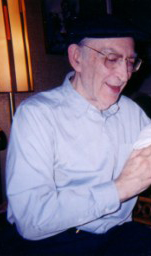
1922-2010
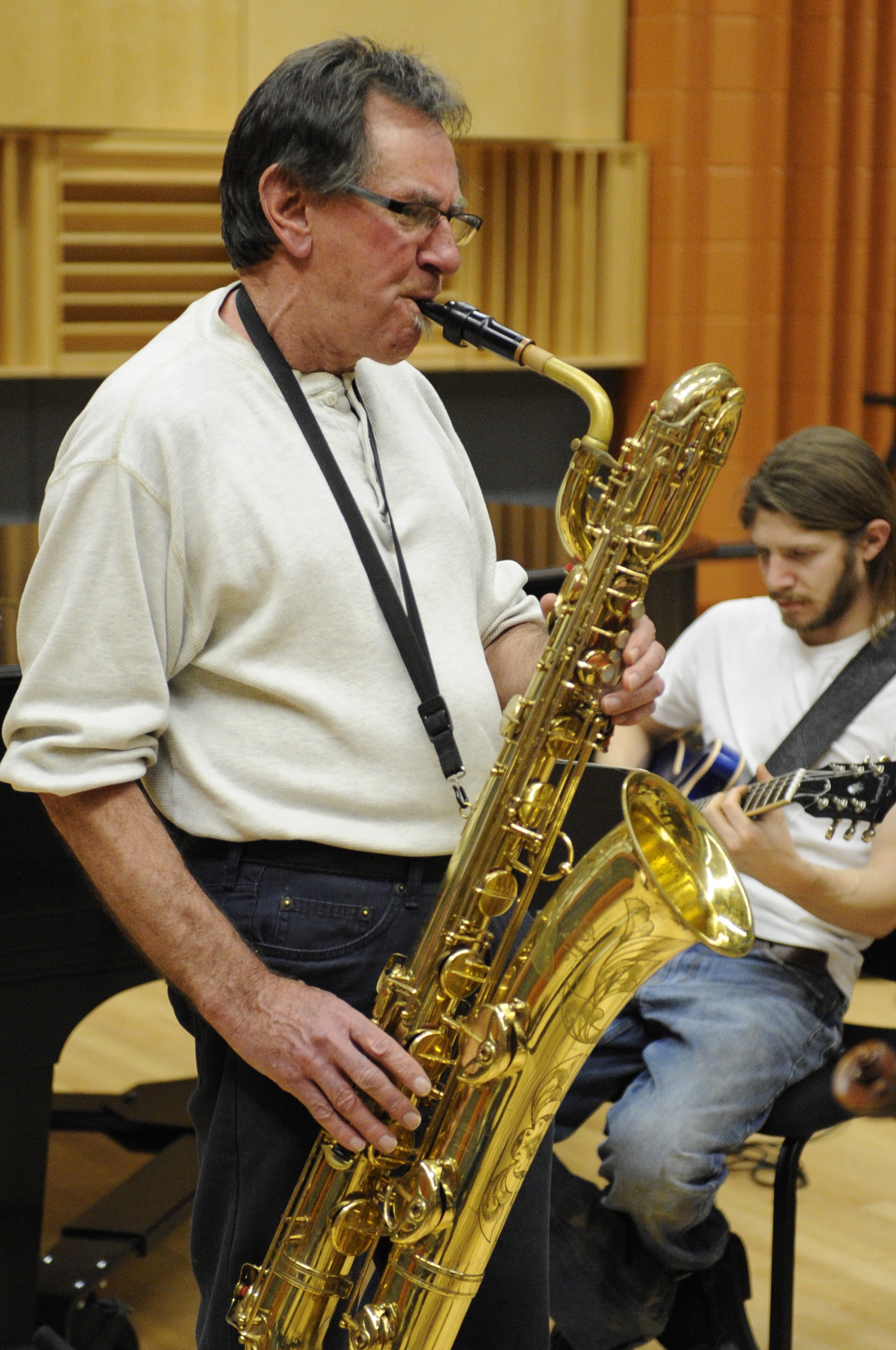
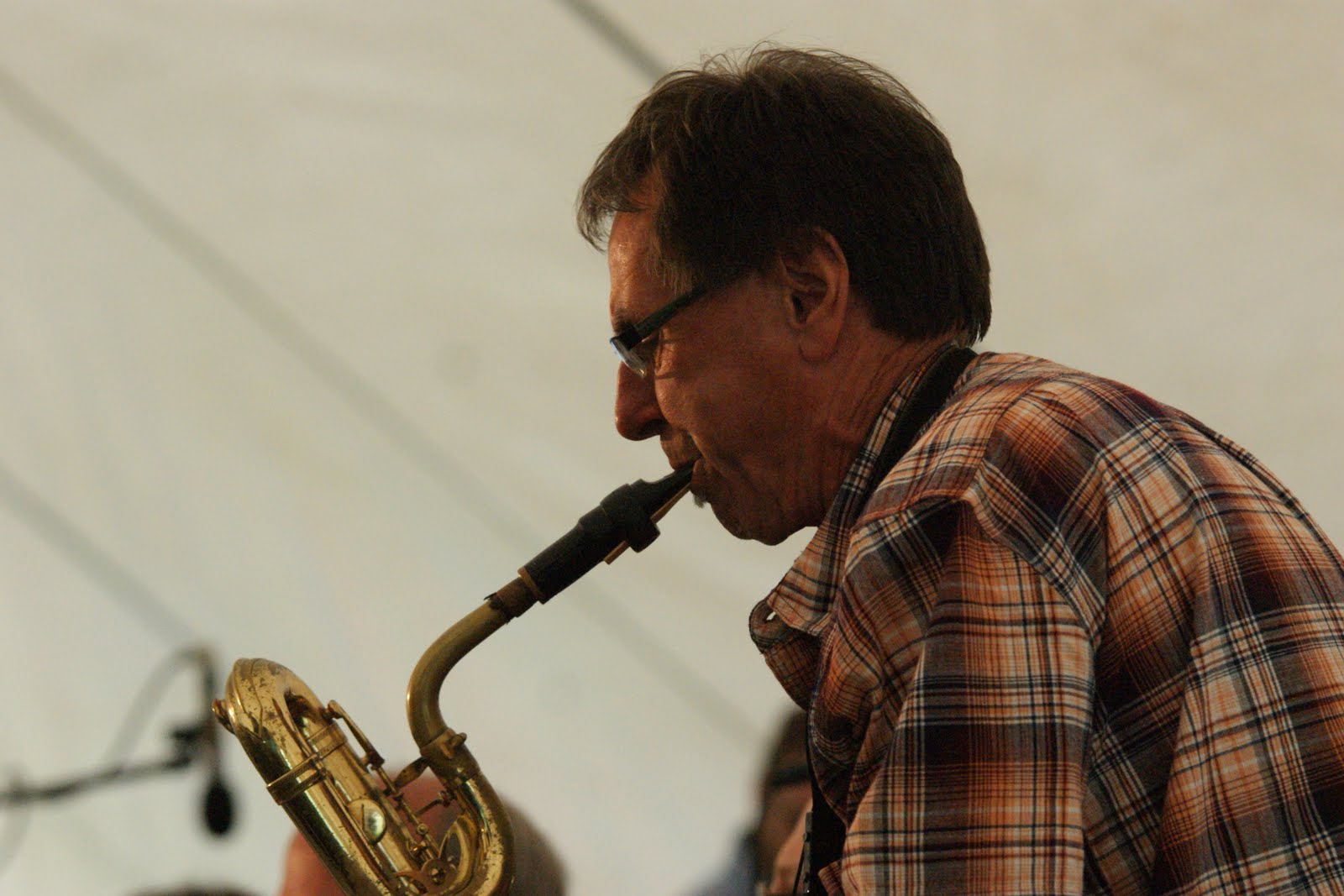
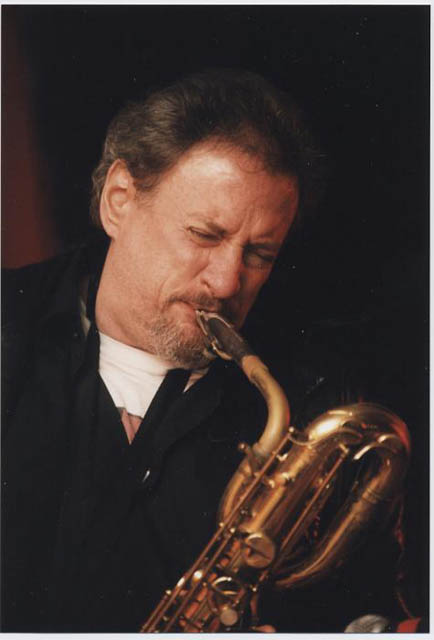
We are sad to report that on June 5th, 2010 Danny Bank passed away. He was a great teacher, and an incredible musician. He is one of the most recorded baritone saxophonist of all time.
Read an interview from 2008 with Danny here.
Read what saxophonist Jon Gordon has to say about Danny.
Danny Bank, The Anchor in the Reeds
Article by Richard Johnson
Danny Bank may very well be the most recorded baritone saxophone player in the history of the instrument. Beginning in 1938 when he waxed “I’m Puttin’ All My Eggs In One Basket” on a 78 rpm disc with the Charlie Barnet Band and vocalist Mary Ann McCall, and continuing through the 40’s, 50’s, 60’s, 70’s, 80’s and on into the 1990’s, the big sound of Danny Bank’s baritone sax has been captured on a long string of 78’s, 45’s, l.p.’s and compact discs that in all likelihood exceeds 10,000 separate recordings. The grand total of these recordings has not finally been determined, but on a recent tour of Japan with an Ellington ensemble led by Gunther Schuller Danny encountered an enthusiastic Japanese fan who had actually catalogued over 9,000 record titles that included Danny Bank’s name on their personnel rosters. To this incredible sum Danny adds another thousand or so (for good measure) that he recorded without receiving any credit whatsoever.
Unlike Gerry Mulligan, Danny Bank never recorded as a leader, and unlike Harry Carney, Danny Bank was not tied to one band throughout his career; but Danny Bank has had a long and varied career working as a sideman for almost every notable leader in the jazz world as well as many in the pop and classical worlds. Danny explains the reasons for his longevity in a sort of self effacing way when he says, “I suppose I lasted so long in this business precisely because I wasn’t a big star. After all, stars come and go out of the limelight very easily, but the guy who gets the job done, and knows how to please the leader, he’ll be around for a long time.”
Indeed, the list of band leaders who have relied on Danny Bank’s services over the years reads like a virtual Who’s Who of American pop and jazz music: Charlie Barnet, Benny Goodman, Artie Shaw, The Dorseys, Woody Herman, Charlie Parker, Miles Davis, Gil Evans, Oliver Nelson, Louis Armstrong, Sauter- Finegan , Sonny Rollins, Quincy Jones, Dizzy Gillespie…the list goes on and on. And as Danny Bank approaches his 70th year of life while continuing to perform and record regularly with seemingly undiminished power, the title “Dean Of The Bari Sax” seems both fitting and appropriate.
It all began with his birth in Brooklyn on July 17th, 1922. At age 3 he contracted what was then called “brain fever” or, as it is known today, polio. The disease left the youngster with a serious disability that has made it necessary for him to wear a cumbersome leg brace to this day.
The fact that he went on to lead such an active life, dragging the monstrous baritone sax and several other unwieldy horns along the mean city streets, down into the inhospitable New York City subways, and negotiating the meatgrinder turnstiles and other assorted obstacles of everyday life is a testament to Danny Bank’s pluck, determination and, above all, courage. He didn’t let anything stand in his way. Well, almost anything… His uncle, Julius Chalif, gave him his first music lesson on the violin at age 7, but Danny soon conspired to break the infernal instrument so that he wouldn’t have to listen to the tortured sounds of his own youthful practicing. At age 9, after a brief fling with an Albert system clarinet and a C-Melody saxophone, he swapped them for a Selmer “Pea-Shooter” alto sax that he played until he got his first baritone in the mid-thirties. In the meantime he hung around on the front stoop in Brooklyn playing his ocarinas, harmonicas or pennywhistles (and a game of chess or checkers simultaneously) to accompany the “double dutch” rope-jumpers. It was a time, he recollects, when he became known as “the life of the party.”
At first he was a terrible reader, but “doing everything the wrong way” showed him the pitfalls that could plague students and eventually it helped him to become a better teacher. At age 11, while recuperating from an operation, he joined the hospital band on alto sax because he heard that the 3rd alto also doubled on clarinet and, therefore, got all the Artie Shaw-type solos. During this period he was having such trouble with his reading that, out of sheer frustration, he taught himself how to tap his foot in 2 and to visualize the center of the bar. This prompted a momentous discovery for the youngster because suddenly “Irving Berlin opened up like a Bible!”
After his recuperation he entered and won a Major Bowes’ Amateur Hour contest for playing his flute and alto sax rendition of “The Flight Of The Bumble-Bee”. That summer the 12-year-old sensation went on tour with Major Bowes and kept a secure grip on second place wherever they appeared, for it was the Major’s strict policy to always let the local talent win first prize.
Back in New York Danny joined the National Youth Administration Orchestra, a W.P.A. organization that eventually turned into Leopold Stokowski’s Youth Symphony and embarked on a boat tour of South America. The great Stokowski was impressive enough for the young musicians but, it also happened that Stokowski’s girlfriend at the time was none other than femme fatale Greta Garbo who accompanied them on the trip and lent an air of glamour to the youthful assemblage. Danny played bass clarinet in the orchestra’s reed section along with Mitchell Lurie who played first clarinet. Among other things, Danny was deeply impressed with the maestro’s phenomenal sense of orchestral balance and his feel for playing a tempo which in Danny’s words became a sort of “inevitable foreverness.”
Upon returning home to Brooklyn the young world traveler began gigging around the neighborhood with youthful dance bands along with his buddies Al Cohn, Tiny Kahn, Paul Cohen, Al Epstein, Eddie Caine, Ray Beckenstein, Shorty Allen and Frankie Socolow. Frequently he played in Jewish club-date bands and learned a lot about clarinet playing from a klezmer star named Dave Tarras. Danny was playing mostly lead alto at this time, but he was impressed with Ozzie Nelson’s band which featured a baritone sax player named Billie Miles. “He was a star,” Danny remembers, still wide-eyed, and his attitude towards the lowly baritone began to change. Then, after he was exposed to the music of Jimmy Lunceford and Duke Ellington and their baritone sax stars Earl “Jock” Carruthers and Harry Carney, his estimation of the baritone changed forever. In 1935 he bought a Selmer “Pea-Shooter” baritone for $15 and started to bring it to rehearsals. Someone pointed out to him that he knew how to modulate from one tune to another (it hadn’t occurred to him that he didn’t) and his marriage to the baritone sax was sealed forever.
His father passed away while Danny was still in his teens, but his widowed mother scrimped and saved in order to send him to Brooklyn College where he studied to become a doctor and on weekends he played in club-date bands in order to bring home some much needed “do-re-mi”. During this time he played with a variety of bands such as Morton Gould’s WOR Radio Band, the Casa Loma Orchestra, Georgie Auld’s rehearsal band, Vido Musso’s rehearsal band, Lee Castle, Bob Chester, Herbie Fields, and even did the record-date with Charlie Barnet’s Band on which Mary Ann McCall sang “I’m Puttin’ All My Eggs In One Basket”. As the musical paychecks became more and more frequent, his mother’s determination to see her son pass through medical school began to weaken, until the end of his junior year when Charlie Barnet asked Danny to go on the road with his band. Hesitation was unthinkable and the suddenly ex-medical student jumped on the Barnet bandwagon on the same night as pianist Ralph Burns and bassist Oscar Pettiford. Almost overnight Danny Bank was a star: bright lights, a wardrobe, pancake make-up and autographs at the stage door. Danny Bank became the Charlie Barnet Band’s first full-time baritone saxophonist.
It was with Barnet that Danny really learned to become a sideman and to play what the leader expected. Charlie nicknamed his young bari player “Hoppy” and/or “Leo The Lion” and coaxed him to emulate the Harry Carney sound: loud and full-bodied. But when he later joined Benny Goodman’s Band the leader expected something quite different. “With Benny I played so softly that it sounded like a whisper in the next room, and Benny loved it. He would stand right in front of me and listen to me play four pianos – pppp – and it just tickled him pink. All the time I was on his band he never even knew that I could play forte, until many years later when we were both out and playing various dates and he heard me really cut loose and it just astounded him. You see, I think he was afraid that the big baritone sound would overpower his clarinet.”
“One summer I was subbing in Woody Herman’s Band at the Paramount Theater along with Al Epstein on the tenor. At the same time Benny Goodman was between bands and playing in a show called “The Seven Lively Arts” on Broadway and one day he and his valet “Popsie” dropped by to catch our matinee. The next thing you know Al and I along with our friends Bill Shine, Stan Kosow and Aaron Sachs were Benny Goodman’s new sax section. We began rehearsing with Benny and when Woody closed at the Paramount we went on tour with Benny’s new band. The pay started out at $135 per week and after two years it had grown to $175 per week, but Benny was notoriously hard on musicians and by then I was the only original one of our group left. During those two years I must have played with about 45 different sax players. Finally I couldn’t put up with it any longer and when Benny started giving me the “ray” – that look of his – I just held up two fingers, meaning two weeks notice, and that was it. I quickly got over my euphoria when I started worrying about where my next meal was going to come from, so I called up Charlie Barnet and told him that I was available and right away he sent me a ticket. And that’s the way it went for 11 years, jumping from one band to another back and forth across the continent. I became known for my workmanlike approach and that’s what the leaders wanted. I was constantly employed and sending home enough money to support my mother (along with suitcases full of dirty laundry) and I was a star! What more could you want?”
Ah, the sweet (and sometimes bitter) memories of life on the road! On his first tour with Barnet’s band the young baritone player encountered the sad face of racial discrimination first hand. His regular roommate was the trumpeter Peanuts Holland who as one of the stars of the band was making much more pay than anyone else. Nevertheless, whenever the band pulled into a new town, if Peanuts wanted to stay in a good hotel he was forced to carry Danny’s bags up to the front desk and wait while Danny registered them as “Danny Bank & Chauffeur.” And the “kid” did a lot of “lobby duty” in those days while his roommates entertained their lady friends, so in order to get out and see some of the country he took up flying. At an airport in Kansas he started taking flying lessons and eventually, after hopscotching to several different flying schools across the country, he got his solo license. Motorcycles were another fascination and he toured the West Coast one summer with his baritone sax strapped onto the back of his Ariel leading Jimmy Dorsey’s band bus from gig to gig.
Danny also has a distinct memory of the transition from acoustic to electric that occurred in the 1940’s. When Eddie Safranski (the bass player with Barnet’s band) brought in his first electric amplifier to a rehearsal and placed it behind Danny, Danny got so upset that he threatened to quit. Finally, in order to maintain harmony, Charlie moved the bass and the baritone to opposite ends of the bandstand.
From Barnet to Herman to Goodman and back and forth a few times, Danny also played with Claude Thornhill’s Orchestra and then joined Jimmy Dorsey’s Orchestra. It was in 1947 at the Paramount in New York City and Danny got a room at the Piccadilly Hotel nearby. The night Jimmy left town, New York was hit with a tremendous blizzard and Danny wanted to stay near home for a while so he joined Ray McKinley’s Band in the same theater on the very next day. But New York was blanketed with at least two feet of snow and everything had stopped running. No problem. Danny hired a couple of kids who piled him and his baritone sax onto their sled and hauled him down Schubert Alley and delivered him to the stage door of the Paramount just in time for the new band’s first performance. Danny also played with Bob Crosby’s Orchestra for a while and then joined Artie Shaw’s Band. Artie’s sax section at the time included Zoot Sims, Al Cohn, Herbie Stewart and Frank Socolow and Danny remembers it fondly as the best section he ever worked in. Unfortunately, Artie got sick with kidney stones and had to go into the hospital for an operation and the band dissolved. After that Danny replaced Sol Schlinger in Tommy Dorsey’s Band, but after about 6 months with the “Difficult Dorsey” Danny asked for a raise that he knew would not be forthcoming in order to have an excuse to quit. Then he moved on to Buddy DeFranco’s Band.
By now it was 1951, the big band scene was petering out, Danny was road-weary, and, now a little older and a little wiser, he was becoming increasingly aware of his limitations. So he settled back into New York City, rented space at the old Leon Russianoff Studios in Times Square, and began a diligent study of both the clarinet and the flute. It was a humbling experience for the big band veteran. “Here I was a star wearing pancake makeup and signing autographs when suddenly I had to approach a teacher and admit to him that I didn’t really know anything!” But considering the high quality of the teachers he sought, a little humility was not misplaced. On clarinet his teachers included Daniel Bonade, Simeon Bellison and Leon Russianoff, the last one being the most impressive of all because he did not limit himself to the technique of the clarinet, but rather “taught music through the clarinet.” Bellison, on the other hand, upon finding out that Danny had been playing saxophone with Benny Goodman, turned him out of his studio and would have nothing further to do with him. On flute the list of Danny’s teachers gradually grew to include, the first flute for the Philadelphia Symphony, Henry Zlotnick, Julius Baker, John Wummer and Harold Bennett – a stellar group that Danny refers to as comprising “the mainstream of the flute.”
As far as saxophone studies were concerned, except for his early teachers in high school, Danny picked up most of his knowledge during his many years on the road with the big bands – and not always from saxophone players. Tommy Dorsey, for instance, showed him how to practice long tones and taught him the technique of circular breathing with a straw and a glass of water. From trumpeter Al Killian, who almost nonchalantly tossed out those altissimo notes, he learned economy of effort and how to “pre-imagine” the notes before they were played. Igor Stravinsky taught him to disregard bar-lines when, at a rehearsal of “The Ebony Concerto” with Woody Herman’s Band, he casually mentioned that he only included the bar-lines so that the copyists would know how much to charge him. “Looking ahead of the music” and “playing the way you feel” were lessons that he later gleaned from Phil Woods.
At first, having relocated himself back in The Big Apple after 11 years on the road, Danny was virtually a stranger. He welcomed the opportunity to woodshed, but musical gigs were few and far between, so in order to support himself and his widowed mother he took a midnight to 8 a.m. job at the Fairchild Aviation factory where he measured camera parts. During the day he haunted the union hall trying to scare up gigs, studied, practiced and did an occasional club date, recording session or subbed in the Broadway pits. The night job quickly proved to be mind-numbing and Danny recalls his time spent in the limbo factory thus, “Every time I looked up at the clock on the wall another minute had passed.”
Fortune soon smiled on him though, when backstage during a break in a record date that he was making with one of the male vocal groups of the day (could it have been the Ink Spots? the Ames Brothers?- It’s all a blur!) Danny overheard the arranger and the A&R man saying that they finally had a big hit on their hands and that they should stick with this same group of musicians. Danny was overjoyed and quit his boring factory job immediately. Soon he was doing 3 and sometimes 4 record dates a day and was quickly becoming a studio stalwart much in demand by record producers who valued his boundless ability to play in the expected style as well as his solid reading skills that would inevitably save them a bundle in overtime. And as the calls came in his doubles increased: flute, clarinet, alto flute, piccolo, bass clarinet, bass flute, bass saxophone, oboe, alto, tenor and soprano saxes, contralto clarinet. Of course, the doubles helped to fatten the paycheck that the lack of overtime kept thin. But in the recording frenzy of the fifties it quickly got to the point that if he dared to mention to an arranger in casual conversation that he had a new horn, that voice and a part for him playing it would soon turn up on the next date. Danny Bank was moving into a league with a group of men who were to become legends not just as “doublers”, but as “quadruplers”: Toots Mondello, Willie Smith, Phil Bodner , Romeo Penque, Hilton Jefferson, Jerome Richardson and Harvey Estrin.
Danny played through the 50’s and 60’s heyday of recording dates and remembers most as interesting yet demanding work sessions where the pressure to perform four sides in a 3-hour time limit with a begrudging sense of overtime constantly competed with the performer’s need for satisfaction. However, other dates stick out in his mind like ripe pleasures to be savored again in the recalling. The Miles Davis – Gil Evans collaborations on the albums Miles Ahead, Sketches Of Spain, Porgy & Bess and Miles Davis + 19, where the musicians sat around in a circle with a single microphone suspended in the middle, took the time to tune properly and to work out ensemble parts and to luxuriate a little in the powerful brew of Gil’s arrangements and Mile’s haunting tone. The Sauter / Finegin Orchestra recordings where one leader remained in the recording booth while the other stayed in the studio with the musicians directing the tuning, phrasing and so forth and bringing in 2 near-perfect sides in 3 hours with no worry about overtime. After occasions like those champagne suddenly appeared and corks were popped.
After the session with Charlie Parker on Clef Records Danny gave Bird a ride home to his pad on the Lower East Side. He remembers asking Bird why he hadn’t ever picked up the clarinet, and after a thoughtful pause, hearing Bird’s stoned reply coming to him in a queer sort of cackling falsetto, “Because I don’t hear jazz way up here like this!” Followed, after another more pregnant pause, by that joker’s voice as it slid down deeper to conclude with, “I hear it more down here like this!”
While on the subject of Bird, Danny waxes lyrical, “Although I was a bit slow at first to appreciate bop, I quickly realized that Charlie Parker was the greatest musical genius of our times and I knew that there wouldn’t be another like him for another hundred years or so.” Danny first remembers seeing the young alto player when he began showing up at Barnet Band rehearsals to pester Ray DeGeer for tips on how to play lead alto. Then Danny played in the section together with Bird on lead alto in a legendary rehearsal band led by guitarist Brick Fleagle. And if he harbored any lingering doubts about the extent of Bird’s genius they were quickly dispelled by a casual conversation he had with John Coltrane one night in Birdland. Danny was playing in Oscar Pettiford’s Band opposite Trane’s Quartet and during a break he asked him why he practiced so incessantly and played with those so-called “sheets of sound”. Trane’s reply was blunt, “I’m trying to do everything in my power to avoid playing like Charlie Parker.”
Danny Bank also remembers making the recording of Hair! with Louis Armstrong backed up by Oliver Nelson’s Orchestra and a large chorus of singers that included in their ranks none other than Ornette Coleman who idolized Satchmo and was desperate to record with him even if he had to sing to do it. And the Alfie album where Sonny Rollins showed up with three tenor saxophones hanging from his neck and wandered around so much that out of desperation the engineers taped a microphone to the bell of his horn. And then Billie Holiday’s last album Lady In Satin – her fading beauty and her courage in the face of death. After Lady Day passed away Danny inherited her cook, a character whose real name was Mosley, but who was universally recognized by his nickname “Freddie The Freeloader”, who served a long stint as his schlepper.
One thing led to another and between recording dates and often at the same time Danny Bank found employment in the pits of various Broadway shows. Little Me starring Sid Caesar, Jamaica with songs by Harold Arlen and starring Lena Horne, The All-American starring Ray Bolger, Purlie starring Cleavon Little, Irene starring Debbie Reynolds, and Sail Away and High Spirits both written by Noel Coward.
Then there were various radio and t.v. bands where the musicians would play the theme, the backgrounds and the “bridge music” between the scenes. In those days it was all done live and the show might only be on the air for 15 minutes a day, which left the musicians plenty of time for other gigs. When Danny was playing with Bob Crosby in 1948, the band was bussed out to Camden, New Jersey for what must have been one of the first color t.v. shows. It was a variety show with Bob Hope as m.c. that originated from the old Campbell’s Soup factory where a crude studio had been set up with unbearably hot lights and an extra thick layer of pancake makeup for all the performers. Danny also worked regularly on t.v. shows with Arthur Godfrey and Kate Smith and on Kenton ’55 a weekly show featuring the Stan Kenton Orchestra that appeared on the airwaves throughout the summer of 1955.
His work in radio and t.v. led to jobs on cartoons such as the Walt Disney cartoons and Terrytunes. Danny attributes the further development of his sound to this period because the engineers were constantly playing back what had just been done for all to hear and judge. (He says the other great influence on his sound was “how often the telephone rang.”) He did a lot of jingles and ads with Chico Hamilton’s group, where frequently they went into the studio and just improvised the soundtrack on the spot. And perhaps you’re old enough to remember the famous signature sound of “J-E-L-L-O” that Danny Bank played on his alto flute.
He also worked on the famous Cinerama movies where three cameras and a wrap-around screen rendered a breath-taking visual experience along with a stunning soundtrack that combined the talents of some of New York’s finest musicians – both classicists and jazzicists alike. The result was a thrilling orchestral experience that, as Danny recalls, “gave equal pleasure to both sides.”
When the low-A baritone started to become popular in the mid-1950’s, Danny got a call to do a record date from Milton DeLugg, who told him that the job absolutely required a low-A on the bottom. After listening to Danny hem and haw for a while about the superiority of his Conn vs. the Selmer, DeLugg finally told him to either bring a low-A baritone or to send a sub. After much agonizing Danny went out and rented a low-A Selmer baritone from Ponte’s Music store, but immediately upon playing it realized how much he disliked it. “The design of a large crook and short neck produced flat upper notes,” he said, “and that large crook got between my eye and the sheet music so that I ended up reading between the curves.” The record date was imminent and there was no time – and little inclination – to practice the new monster. So Danny showed up at the studio with two horns, his trusty old Conn, with which he played most of the date, and on a stand beside it, the shiny new Selmer low-A with all of its’ keys corked shut so that it would produce only that one low note. Needless to say, DeLugg was chagrined, but he never mentioned the low-A to Danny again and the two men have continued to work together throughout the years, most recently on the annual Macy’s Christmas Day Parade which, incidentally, has been Danny’s longest running gig (their 29th parade in 1991).
Around this time Lena Horne’s husband/manager Lenny Hayton asked Danny to contract one of Lena’s recording dates. Danny took the matter in deadly earnest and rounded up the best players he could find. Then at the session the lead violin took him aside and told him, “You really screwed up because you didn’t hire any contractors. They’ll never forgive you and you’ll never get any work out of this for yourself.” The session went off beautifully, but Danny’s failure to play politics was an oversight that aborted his budding contracting career.
Danny Bank was one of the charter members of the New York Saxophone Quartet along with Ray Beckenstein, Eddie Caine and Al Epstein, but when Eddie Caine moved to Florida the chemistry of the group changed in a way that left Danny so cold that he eventually dropped out. According to Danny the original idea for the group occurred at a party sometime in the 50’s when he, Stan Getz, Eddie Caine and Al Epstein sat down and played some quartet music by Bozza and Jeanjean and the idea just “clicked.” Incidentally, for this initial session Danny played the soprano parts on his clarinet and loaned his baritone sax to Stan Getz. Today Danny enjoys listening to the World Saxophone Quartet who, he says, “have taken the idea in the logical direction.”
Around the New York area Danny Bank has forged a reputation as an outstanding teacher and, even on the bandstand, he is the one that the younger players turn to when confronted with a difficult passage or seemingly impossible fingering. Danny gave his first lesson shortly after he received his own first lesson, teaching a friend what he had just learned for half-price. It was a smart move that has kept him one step ahead of the game ever since. The list of his students is lengthy and impressive. For starters, as he puts it, “I studied with Harry Carney before he knew it and then when he realized it, I taught him the flute.” As a teenager, Danny had been a camp follower of the Ellington Band and, being too young to get into some of their dance concerts, the guys set him up in a folding chair directly beneath Harry’s spot on the bandstand. Needless to say, Danny was in Seventh Heaven. And, yes, Danny later gave his hero Harry Carney several flute lessons in (partial) return for all the things that he had picked up over the course of a lifetime of listening to the Duke’s great baritone player. Shortly before his death Willie Smith also received some flute instruction from Danny while they were working together on Charlie Barnet’s brief return engagement in New York in the 60’s. Bud Shank and Dick Hafer and Zoot Sims also learned about their doubles from Danny as have such New York studio stalwarts Roger Rosenberg, Bill Easley, Kenny Berger and Ronnie Cuber.
Danny’s teaching philosophy can be summed up briefly with the motto: “Be Accurate!” He doesn’t condescend to his students. His explanations are clear and to the point and his methods have been passed down from masters. “There are always two ways to do anything,” Danny explains while contemplating what route to take to his next gig, “the quick way and the sure way. The quick way may get you where you’re going with plenty of time to spare or it may make you so late that you’ll lose the gig. The sure way, on the other hand, will undoubtedly be harder and you may be stuck in traffic for awhile, but you know that you will definitely arrive at your destination. So you leave the house a little bit earlier. The sure way is a better bet.” When he’s feeling energetic Danny has been known to put so much into a lesson that the student begins to wonder who’s getting more out of whom and to inquire about the time. Needless to say, Danny is a firm believer in the idea that the teacher gets as much out of the lesson as does the student.
Of course the baritone saxophone remains the heftiest gun in Danny Bank’s arsenal and his all-time favorite baritone sax player is Harry Carney, “who remains to this day the standard by which all the others are measured,” but also high on Danny’s list of baritone greats are: Budd Johnson, Jack Nimitz, Al Cohn (whose bari sound “left a lasting impression”), and the little-known Bob Gordon who played on Clifford Brown’s first record.
Few people are as well versed in the repertoire of big band arrangements as is Danny Bank and his favorite arrangers over the years have been the ones who kept it simple and swinging. Buck Clayton, Benny Carter and Nelson Riddle rank high on his list of favorites, but the top spot is reserved for Al Cohn, whose reputation as an arranger has generally been eclipsed by his reputation as a saxophonist. “The simplicity of his arrangements was akin to Bach’s,” Danny says. “He used little more than quarter notes and eighth notes, but, brother, they were the right notes and they swung like mad!” Danny commissioned an arrangement by another of his favorite arrangers, pianist George Handy, who he says, “could write by the pound,” but he has never had the opportunity to record it. It includes the rather unique combination of flute, oboe, clarinet, bass clarinet, bassoon, trumpet, french horn and violin.
Whenever Danny can find even a few spare moments and a willing opponent he loves to engage in a good game of chess. Over the years he has played the game against all comers and he ranks Dizzy Gillespie and Bud Freeman (who billed himself as “the Champ of the Mid-west”) as his two most formidable musician-opponents. On the other end of the spectrum he ranks Charlie Parker as one of his least capable opponents even though Bird took the game very seriously and got almost violently angry when he lost and tormented himself in trying to figure out how he had been defeated. Artie Shaw was another serious chess player, and his matches with Danny were memorable even though each man now recalls a different outcome. Danny belonged to the famous Marshall Chess Club in Greenwich Village for many years and even played a game once with a 14-year old lad named Bobby Fischer who promptly dispatched Danny and 19 other chessaholics simultaneously in less than 20 moves.
Now approaching the august age of 70, Danny Bank continues to work as frequently as possible in all sorts of different musical settings. However, the big bands are still his favorites. He is a regular in one of the best big bands in the New York area, the Loren Shoenberg Jazz Orchestra, which is led by a young tenor sax player named Loren Schoenberg who at one time was Benny Goodman’s secretary. This band’s repertoire ranges from the King Of Swing to the Duke Of Ellington (& beyond) and Danny Bank is one of the few baritone players who can cover such diverse ground with any real authority. Danny is also a regular member of The American Jazz Orchestra, a group that was founded by jazz critic Gary Giddins and pianist John Lewis of MJQ fame in order to keep America’s own true “classical” music (i.e. jazz) alive in much the same way that the great symphonies keep the classical music of Europe alive. As Danny sees it, “The repertoire orchestra is one of the logical and inevitable directions in which jazz must proceed. There will always be new jazz music, but the music of the jazz masters will constantly be renewed and refreshed by our efforts and eventually every major city will boast of their own Jazz Symphonic Orchestras in much the same fashion as they do today with their Classical Symphonic Orchestras.”
Currently the “Dean Of The Baritone Sax” resides in a quiet and convenient section of Queens that is conveniently located “between two airports” – where he maintains a steady private teaching schedule, while patiently waiting for the phone to ring to tell him which of his many horns needs to be warmed up next.
DANNY BANK’S INSTRUMENTS:
Late-model Conn baritone sax –
One of the first to be manufactured in Nogales, Mexico, that had belonged to Charlie Fowlkes of the Basie band just before he passed away. Danny uses Charlie’s old Meyer medium-chamber mouthpiece that came with the horn and LaVoz medium-hard reeds.His first baritone was a Selmer balanced action that he was playing when he joined the Charlie Barnet Band in 1942. After Barnet heard him play it for a while he took him aside and told him that he wasn’t loud enough and that he wasn’t getting a substantial enough sound for Barnet’s taste and that he should switch to a Conn and listen to Harry Carney who had the sort of deep and powerful baritone sound that Barnet admired and wanted for his band. Danny quickly made the switch and hasn’t looked back since. The Selmer wasn’t a loss, however, because Danny quickly sold it to Serge Chaloff who went on to use it for many years.
1971 Buffet Clarinet
with gold-plated keys with a silver plated Selmer mouthpiece model HS** and Mitchell Lurie Premium medium-�hard reeds. The mouthpiece is an unusual one that he bought in a hock shop when he was 15 and has been using ever since.
1958 Leblanc bass clarinet
that he purchased after a conversation with Leon Leblanc himself who told him that he had designed the horn for a pitch of A=441 because “a professional can’t be late for work and he can’t afford to be flat.” Mouthpiece: an old Selmer C* with a serial number, and Van Doren bass clarinet or medium-soft tenor reeds.
1971 Haynes gold, open-hole, B-foot flute with silver keys.
When he was considering stepping up to a top notch flute, Danny wrote to Verne Powell and asked his opinion as to the best material for a flute and the master flute-maker responded that unquestionably the best material was gold, for it would not “blow sharp”, but that the composition of the keys made absolutely no difference whatsoever. Danny promptly ordered one of Powell’s silver flutes and then waited four and a half years for delivery. He played the Powell for many years, but his yearning for the sound of gold and the great appreciation in the value of the Powell finally got the better of him and he made the trade (and saved about half the price of the new Haynes by opting for the silver keys).