New Ronnie Cuber Transcription!
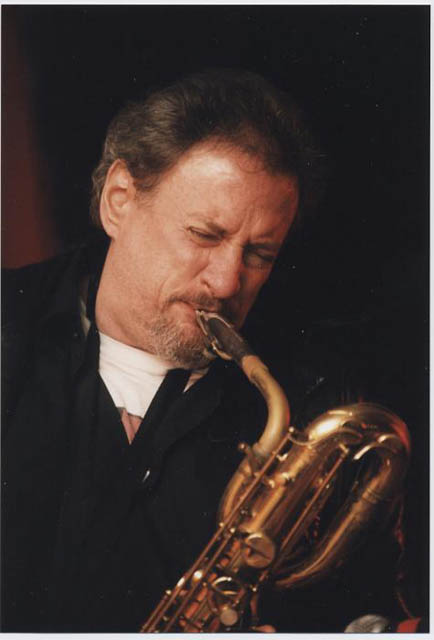 A new transcription of a Ronnie Cuber solo on the beautiful song, “Emily” has been posted to the transcription page. Thanks goes out to Bohdan Janeczek for this new transcription!
A new transcription of a Ronnie Cuber solo on the beautiful song, “Emily” has been posted to the transcription page. Thanks goes out to Bohdan Janeczek for this new transcription!
Gary Carner, who has done a huge amount of work to promote and spread Pepper Adams‘ great legacy has a new project and it needs some help from everyone. See what he has to say about it:
“I’m very excited to let you know that I’ve recorded a fantastic new CD of big band charts of Pepper Adams compositions for Motema Music. This is the sixth CD in my series, and it’s the first recording of its kind ever undertaken. It will be released in January, 2014. It wouldn’t be possible if it wasn’t for the esteemed British arranger Tony Faulkner, who wrote all the charts. Faulkner is little known outside of England, but this project should change that in a hurry.
Ten superb performances that were done over Easter weekend by the Concert Jazz Band at the University of Illinois, with solos by their superb faculty, including Glenn Wilson. I need to raise $7,000 to pay the arranger for all his great work, to pay the engineer to mix and master the date, and to pay for Faulkner’s flight to the US so we can promote this great music with concerts, lectures, and radio shows throughout the US and Canada.
In order to release the recording, and subsidize the CD marketing tour to promote this great music in advance of its commercial release, I’m asking for your help. Kickstarter is a project-driven, crowd-funding website that allows the Pepper Adams world community to work together in a grassroots way to make this happen and perpetuate Pepper Adams’ legacy. But it’s an all-or-nothing deal. If I don’t meet or exceed my goal of $7,000 by the 30-day deadline, no money changes hands, no rewards are given, the new recording stays on the shelf, and the tour is in jeopardy. Can you please help? Can you work with me to bring this exciting project to fruition?
Please use either URL, go to the site, and donate whatever you can. No donation is too small and all is very much appreciated! For your generosity, some great gifts await you! You’ll see them at my Kickstarter page.
This is a 30-day sprint, so please spread the word. I’m looking forward to sharing this music with you. Long live Pepper Adams!
Thank you,
Gary Carner”
 Great news from fellow baritone saxophonist, Shirantha Beddage!
“I’m excited to report that on Friday, July 5, 2013 I won the Galaxie Rising Star Award at the Montreal Jazz Festival! This prize was based on a performance at the Festival by my quartet, which included Dave Restivo, Mark Kelso and Mike Downes. The award is given for the most outstanding Canadian composition amongst the groups performing in the outdoor concerts, and it is a cash bursary accompanied by airplay on Galaxie Satellite Radio in Canada. The jury selected two of my tunes, “Baker’s Dozen” and “Winds of Change”, both from my Juno-nominated new album, “Identity”. As a result, I was interviewed by Mark Ruffin (Sirius / XM Satellite Radio – USA) and Michael Bourne (WBGO – New York City) during the festival.”
Congratulations to him! Be sure to check out his latest album.
 The winner for Baritone Saxophone in the 61st annual DownBeat Magazine Critics Poll is Gary Smulyan!
The winner for the Rising Star category is Vinny Golia.
We’re looking forward to the readers poll opening soon!
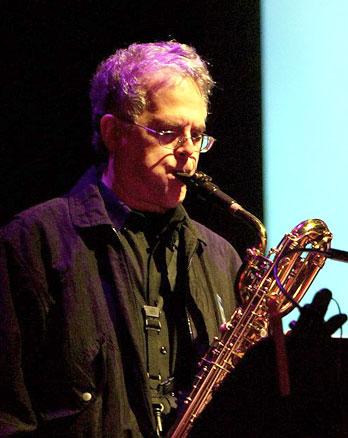 Roger Rosenberg has recently submitted a great article with his unique insights on playing in sections as a baritone saxophonist. Roger has a huge wealth of knowledge when it comes to playing in ensembles and he has played and recorded with some of the best bands around.
Click here to read Roger’s article on section playing!
You can catch Roger June 1st at Smalls in NYC co-leading the Hayes Greenfield-Roger Rosenberg Quartet. Roger will also be on tour with Steely Dan mid July through October.
Congratulations goes to Gary Smulyan this year, as he is the current winner of the Jazz Journalist Association’s Baritone Saxophonist of the Year category!
Check out the full list here:
http://www.jjajazzawards.org/2013/05/2013-jja-jazz-awards-winners-music.html

In this installment of the JazzBariSax.com interview series we are featuring one of the best, and hardest working baritone saxophonists out there today, Lauren Sevian has been good enough to take a few minutes to answer some questions for us.
Why the baritone? After struggling with the alto, I tried the baritone and discovered my “voice”. Been with it ever since!
Favorite recordings of and/or with baritone saxophone? Pepper Adams “Encounter” with Zoot Sims, and Burn Brigade with Ronnie Cuber, Nick Brignola, and Cecil Payne. Also a fave is Coltranes “Dakar” with Pepper Adams and Cecil Payne.
How did you find your way to the baritone saxophone? I felt like it was better suited for what I wanted to say vs playing the alto or tenor.
What’s your equipment/set up? A Buffet (new) Low A 400 series, RPC mouthpiece, Rico H ligature, Rico 3 reeds (yes orange box!)
Low A, Low Bb, or “My favorite horn is the one in front of me” ? I’ve always been a low A gal but recently tried the first low Bb horn I really liked! So I’m curious…but I will always go back to playing a Low A.
Anything specific to the baritone you recommend practicing? For me, any kind of technique exercises to help facility, especially in the upper register, helped me tremendously. Especially chromatic exercises.
Tips for young baritone saxophonists? Longtones, practiced in wide intervals to train your embouchure.
Favorite venue/place to play? Jazz Standard! Also like Kitano & Smoke.
When travelling, does the horn go under or in the plane? I used to bring it on the plane, but due to difficulties traveling recently I just try to get a bari wherever I go. I have a golf case to check it in if I absolutely have to.
Favorite quotes about music? “If music be the food of love, play on” -William Shakespeare
What do you do when not playing music? I like cooking, going out with friends, chilling at home in front of the tube.
Bonus Question: “A penguin walks through that door right now wearing a sombrero. What does he say and why is he here?” He says, “Oh hello El Boogie I’ve brought you your sombrero back.” I let him borrow it since it has been heating up in Antartica. 😉
Find out more about Lauren at her profile here, and visit Lauren’s website.
And of course be sure to check out the rest of the interviews from the JazzBariSax.com interview series.
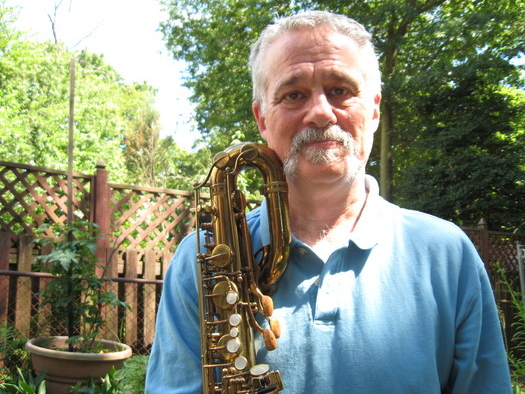 In the next installment of the JazzBariSax.com interview series we have with a us a veteran of the baritone saxophone. Kenny Berger is a complete wealth of knowledge and history of the baritone saxophone. We are very glad he has shared some of his experiences with us.
Why the baritone? – I have always had an attraction to lower pitched sounds and I find the baritone register compatible with my own speaking voice. I also was attracted to its versatility as an ensemble voice as well as a solo voice.
Favorite recordings? – “Reflectory” by Pepper Adams on the Muse label is my favorite record of his and the title track features what I consider to be his best recorded solo. Dakar (Prestige)issued under John Coltrane’s name but actually led by Pepper, features a front line of Trane, Pepper and Cecil Payne. Several of Harry Carney’s features with Ellington are essential listening, including “The Telecasters” from such Sweet Thunder, “Frustration” from the Bethlehem sessions as well as La Plus Belle Africaine and Chromatic Love Affair. I love all the Mulligan Concert Jazz Band records. though my interest in them is primarily from my point of view as an arranger.
Equipment setup? – My horn is a low B-flat Selmer Mark VI ,110,000 series which dates to the early 60’s. Mouthpiece is an old rubber Otto Link Tone Edge 7* that I bought around 40 years ago and used for several years on my old Conn. When I began playing the Selmer I had the piece worked on by Phil Barone and have been using it exclusively for around 20 years. Reeds are Alexander Superial DC 2 and a half. The reeds are so much better than any others I’ve tried that my biggest fear is that like many good pieces of baritone equipment, they may one day stop making them due to lack of demand. So help keep me in business. Buy several hundred boxes today!
Low A or B-flat?– I am a devout low B-flat advocate. Adding the extra tubing for lowA throws the horn out of tune with itself and alters the tone quality of all the notes below written low D and can also cause the palm keys to tune flat. On any conical stopped pipe ( sax, oboe..) the note nearest the bell (low Bb) tends to be bright in quality and relatively free in response while the next note up ( B natural) tends to tune a bit flat and be somewhat stuffy in response. With the low a added these qualities get thrown out of whack and also can have bad effect on the lowC# if the tone hole is not placed right. Every time I play a low B-flat on a lowA horn, I want to reach into the bell and remove the dead animal that I’m sure must be stuck in there. I have several ways of producing a low A without the key. I could describe them but then I would have to kill you.
Anything specific to the baritone you recommend practicing?- The main things I recommend practicing are articulation and overtone exercises. For a jazz baritone player it’s all about articulation as far as I’m concerned. Every time I hear a player whose lines get garbled, whose time is shaky and/or can’t be heard without a mic, it is due to a lack of command of articulation. If you have trouble projecting the solution is not using the brightest sounding setup available, it;s getting your tongue to play more of a role in how you shape your lines and where you place the time.
Tips for young baritone saxophonists? – The horn is an inanimate object. A piece of brass tubing. You, presumably, are a human being with the ability to make inanimate objects conform to your needs. Therefore don’t let the baritone’s size and weight distort your air-stream and and body shape. Try to have the horn hang in a way that allows you to address the mouthpiece and the keys without scrunching up your shoulders and folding your windpipe. No matter how intense the music gets, try not to make what I call the “Jazz Face” (squeezed tight with all energy directed toward the tip of the nose). Keep the so-called facial mask relaxed and open. This is one of the most important lessons i learned from the great Danny Bank which he learned from watching Harry Carney up close.
Try to maintain the integrity of your sound regardless of how loud or unresponsive the rhythm section may get. Don’t change to a bright,uncontrollable setup purely for the sake of projection. Other players’s insensitivity is their problem, not yours. Of course in situations dominated by amplification all bets are off. Best to just ram those earplugs in, cash the check before it can bounce and live to fight another day.
Airplane travel? I long ago gave up the ancient practice of engaging in the ritual dance with airline employees. I have a specially made flight case made by Calzone. It goes under the plane. They make a tracing of the horn and create the tray to fit the individual horn. I had one that was made of wood and lasted me 22 years. The new ones are made of a material that is lighter, thinner and more durable. Never had any damage with a Calzone case.
Favorite quotes about music? – Perhaps my favorite quote about music was not said about music at all. The great Lawrence P. Berra while watching a young hitter try to copy a famous player’s batting stance said “If you can’t imitate him, don’t copy him”.
When not playing music? – I am a rabid baseball fan and an avid reader. I sometimes have 2 or 3 books going at once including books on space science, evolutionary science, history and the occasional murder mystery.
I also dig trail hiking, camping and birding. Playing and writing music takes place in too many windowless rooms. Got to get outdoors.
Find out more about Kenny at his profile here, and visit Kenny’s Website
And of course be sure to check out the rest of the interviews from the JazzBariSax.com interview series.
Two baritone saxophonists in a major TV commercial? Yes, please! Although to be fair neither Frank Basile or Jason Marshall is playing baritone. We’ll take it anyways. We’re not sure which is more shocking, Frank at the piano or his mustache!
While we’re talking about TV commercials, have you seen Howard Johnson’s Miller Lite commercial?
 Next up in the JazzBariSax.com interview series is a very hard working next generation baritone saxophonist. Aside from having released several albums as a leader, Brian Landrus tours the world as part of Esperanza Spalding’s latest band. He took a few minutes to give us some insight into his world. Check it out!
Why the baritone?
The first time I played a baritone was when I was sixteen. It was an old silver conn keyed up to Eb. I turned to my friends and said “I think I’m supposed to be a baritone player”. They all laughed and asked me to stop playing cause it sounded awful 🙂
I bought the axe and played it for years until I was 20 and got a nightly casino show gig where I needed a low A. I then bought a SX 90 Keilwerth with a bank loan.
The same year I was playing tenor with all the Motown bands that’d come through town and when they found out I owned a bari they had me play that instead because they all said its easy to find good tenor players but strong bari players are rare.
When I went to NEC for grad school Bob Brookmeyer encouraged me to focus on Bari and bass clarinet because he said he heard something new with me. That’s been endlessly inspirational.
Baritone has always felt the most natural even when I wasn’t able to maneuver like I heard. I fought it for awhile and then gave in to what I always knew. It’s my voice, and by far my favorite horn.
Favorite recordings of and/or with baritone saxophone?
Hamiet Bluiett-Birthright
Gerry Mulligan’s complete concert jazz band-Complete Verve
Pepper Adams-10 to 4 at the 5 spot
Serge Challoff-Blue Serge
Leo Parker-Let Me Tell You Bout It
George Benson’s Cookbook
Duke Ellington’s Far East Suite
Henk Van Twillert-Bach Cello Suites
What’s your equipment/set up?
I play on a low Bb Selmer Super Action from 1948. Its such a free blowing horn. I have a low Bb VI from 1954 that I also love. The old Conns from 1930-1945 are also amazing and I had one for years.
I play on mouthpieces made by Fred Lebayle. My main piece is a Rubber AT 10. His new metal LR III is also incredible.
Rico Jazz Select filed 4M reeds
Ishimori silver wood stone ligatures
Low A, Low Bb, or “My favorite horn is the one in front of me” ?
Low Bb. The Bb has a free blowing, and more of a large tenor feel to me. It sings more. The low A is a much different horn. It sounds lower and heavier to me, and has more resistance. This isn’t necessarily a bad thing, just my taste. I have owned many Low A horns and still have one for the absolutely mandatory gigs. I’ve learned to not ask the bandleader and they rarely notice.
Anything specific to the baritone you recommend practicing?
Long tones throughout the entire range and focusing on the bottom of your axe as home base. Long tones originating from the fundamental tone (low Bb or low A) makes a solid foundation to jump off from. Use a tuner and listen for the tone to open up with beauty. This will build your flexibility and awareness.
Tips for young baritone saxophonists?
Listen to all the greats. This website has amazing resources to find all the cats that’ve laid the foundation for all of us. Learn the history and carve your own voice from what you learn. Jerry Bergonzi told me something that always sticks out. “We are who we are from three things: who we listen too, what we practice, and who we play with.” That seems poignant to me more than ever.
Favorite venue/place to play?
I’d have to say that out of everywhere I’ve been I really love Paris and Barcelona. London’s Royal Festival Hall might be my favorite venue I’ve ever played. Truly gorgeous hall.
When travelling, does the horn go under or in the plane?
When I fly internationally I put my horn in a Crohnkite gig bag and put that inside an Anvil (Calzone) case and check it. Sometimes the horn needs adjustments on the road because of this. I had it worked on twice on my last three week Europe tour. It’s the only super safe way to go. I have a magnificent Manning fiberglass case that I use for all my US flying. The main issue for me is that I always have at least two horns (usually three) with me. Bari, bass clarinet, and alto flute is most common. The Manning fits in the overhead of almost all planes but in Europe and Asia some planes have tiny compartments-regardless of the size of the plane. Gate checking is never a sure thing because they’ll sometimes put it in the regular cargo hold and you pick it up from the belt anyways.
Favorite quotes about music?
“Practice makes perfect”
“If you work as hard as you possibly can, it’ll all work out the way it’s supposed to.”
What do you do when not playing music?
I love exercise and go nuts if I haven’t worked out. I love pushing myself to run farther and lift more. That helps me stay sane on the road.
What are you currently working on?
I recently recorded the third album for my record label BlueLand Records. It’s titled “Mirage” and will be released June 25, 2013. It’s my Kaleidoscope quintet plus string quartet. I’m currently touring with Esperanza Spalding and planing a new trio record for this summer.
Find out more about Brian at his profile here, and on his website!
And of course be sure to check out the rest of the interviews from the JazzBariSax.com interview series.