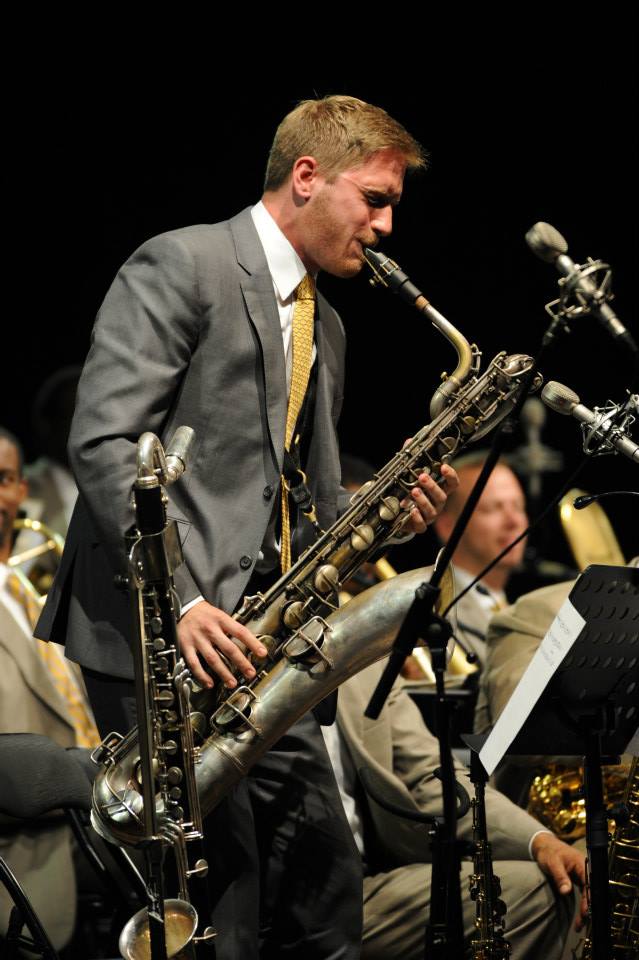
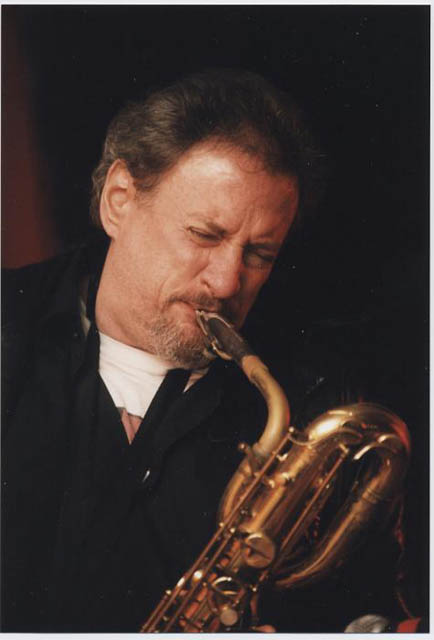
The latest installation of our interview series is with a baritone saxophonist who is taking over the world. Paul Nedzela was kind enough to spend some time while on the road with the prestigious Lincoln Center Jazz Orchestra to give us some insight into his artistry. He has recently been seen performing with the Village Vanguard Orchestra and you can catch him with the Ted Nash big band later this month at Dizzy’s in NYC. On a personal note, I have great respect and awe for Paul’s talents and his congenial vibe. I am glad he has shared some insight into his world with us. – Hadro
Sound.
Sound is always the first thing I notice about any player, regardless of what instrument they play. And personally, I think that sound is the defining characteristic of most baritone players. Though the sound wasn’t what initially drew me to the baritone in the first place. When I went to junior high school, everyone picked up an instrument, and I picked tenor sax. It wasn’t til a year later, after I showed some proclivity for the horn, that they switched me to the baritone; in part, because I was a little bigger than the other kids. Looking back on those first couple of years, like many other bari players, I looked forward to getting the chance to honk out a few low notes and make my mark. It wasn’t until I started studying privately that I started to mature, and slowly approach the instrument differently. I began to hear some of the great baritone players around town; taking in the unique voices each of them had on the instrument. I slowly grew as a musician, assimilating as much as I could, and working as hard as I could to take what I heard and recreate it in my own way.
The horn.
The baritone, more than other horns because of it’s register, can have very different personalities. It is able to sound light and romantic in the upper register, full and vibrant in the middle, and sharp or robust in the lower. It can take on the characteristics of a tenor sax or a trombone, but also a cello, bassoon and even the human voice when played well. Each player must decide for themselves what it is they want to hear in their own sound. Of course, set up can have a lot to do with that. Different horns and mouthpieces will lend themselves towards one approach or another. Personally, I prefer a low Bb horn and I tend to think that older horns have warmer and richer sounds, though that is certainly a generalization. There is nothing inherent in modern horns that prevent them from being able to do that, I just don’t think it’s a priority for those who make the horns these days. Low A baritones have to add a fair amount of metal tubing to the horn which changes the intonation and sound of the horn. Low A’s are recalibrated to account for this of course, but I tend to believe that the extra note isn’t worth it. Ultimately, however, I believe that it is the man or woman behind the horn that makes the sound, regardless of what he or she is playing. Michael Jordan will always be Jordan, no matter what shoes he is wearing. Bird will always sound like Bird, and Coltrane like Coltrane.
Influences.
My influences have changed over the years. My first exposure to the baritone was with the album, Birth of the Cool. That got me checking out a lot of Gerry Mulligan. I loved his pianoless quartet albums. He would certainly be my first influence. After a while I started to feel that my playing was mirroring his a little too much and I started to move away from it. I started listening to a lot of Pepper Adams. I loved his playing with Thad Jones on Mean What You Say, and with Charles Mingus on Blues and Roots. Then I started seriously listening to the baritone players I could in NYC like Joe Temperley, Ronnie Cuber and Gary Smulyan. After a while, I really started listening to and transcribing a lot of other sax players, not just baritone. Now I would consider some of my big influences to be Cannonball, Coltrane, Joe Henderson, and Bird. The real benefit to that for me was realizing that the baritone, like any instrument is to any artist, is a medium or a tool; a means of expressing the music in each of us. And why restrict our appreciation to those who happen to play the same instrument we do?
Practicing.
Now in terms of practicing, I find it hard to give general tips to an unknown audience. But I will say that it’s important to know how to get to Carnegie Hall. For sound, there is no replacement for long tones. There are many different ways to approach long tone exercises, but no real substitute for doing them. Technical exercises can depend on what you’re going for as a musician. I do think that fundamentals will always be important. Knowing and being able to play all types of scales in all keys, at all tempos. A simple enough idea, but a difficult one to master. Then anything from etudes, to an endless combination and permutation of patterns to practice getting around the horn. I think transcribing is a great way to train one’s ear and also assimilate the playing styles of the players we love. Then there is the idea of playing in an ensemble. There are so many skills and concepts to practice in that setting that it’s hard for me to know where to begin. I would say that it’s important to know one’s place at all moments within the group; how your note fits in the chord, what your role is in the composition, what other instruments you’re playing with, and who is leading and who is following. But an overarching idea that I’d like to stress is the importance of focus in everything we play and practice.
The best lesson I’ve learned is that the goal of a musician should not be how to impress or make his or her mark, as I once thought as a child, but rather how to make as much music as possible. And the goal of music, for me, is to evoke emotion, whatever that emotion might be.
Be sure to check out Paul’s website too!
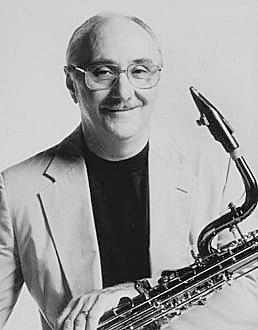 Thanks to Luke Miller we have posted a new Nick Brignola transcription on the well known Clifford Brown tune, ‘Joy Spring’. This is off of Nick’s album, Raincheck. Go to the transcription page and check it out!